
Typical progression of sleep
The typical progression of sleep is difficult to document as the amount and frequency of sleeps is highly variable in the typically developing population. Some general observations about sleep include:
- Newborn babies are adjusting to a very new world face many new challenges of performing tasks that were previously performed by the mother’s body (e.g. feeding, temperature regulation). Babies take varying amounts of time to adjust to these and to develop a sleep cycle.
- Changes in sleep often occur with changes in feed routine such as the introductions of solids and move up to 3 meals. Changes may also occur with major changes in gross motor development (e.g. onset of crawling or walking).
- Daytime sleeps decrease in quantity and number over the first 2 years of life. Some children continue to need a daytime sleep until they reach school age.
- Sleeping through the night is a highly prized goal for parents. Many parenting books suggest that this should occur at the latest by 6 months. However, this is highly variable and dependent on many issues including self-regulatory development (see following section) and nutritional status.
- Sleep is also often disturbed by major changes in routine or illness (including hospitalisation).
- Other factors influencing sleep regulation and other circadian rhythms include environmental cues, exposure to daylight and melatonin production, infant sensory processing and regulation.
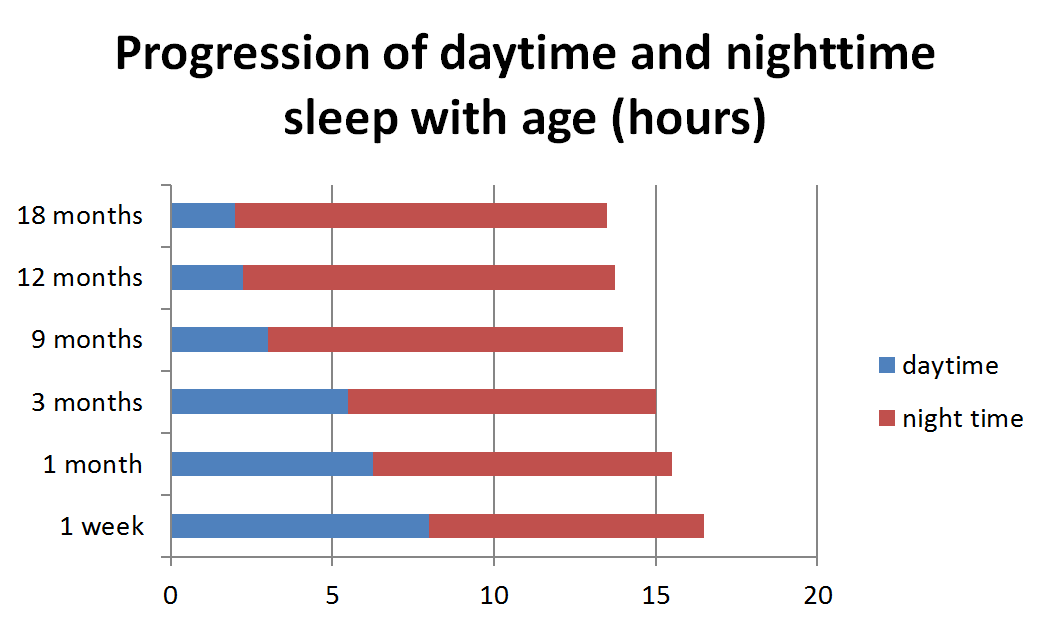
Adapted from Thiedke, C., Sleep disorders and sleep problems in childhood, 2001.
