
Positioning for play
When positioning for play, goals will be different from positioning for comfort, for settling or for improving movement abilities.
Occupational therapists look at positioning for play in order to support the best performance of the child to play (see Promoting Best Performance section) and balance this with the 'just right' challenge
The goal is for the child to:
- Experience success and mastery in play which will feed into
- Motivation for the infant to persist and to try again
Positioning can:
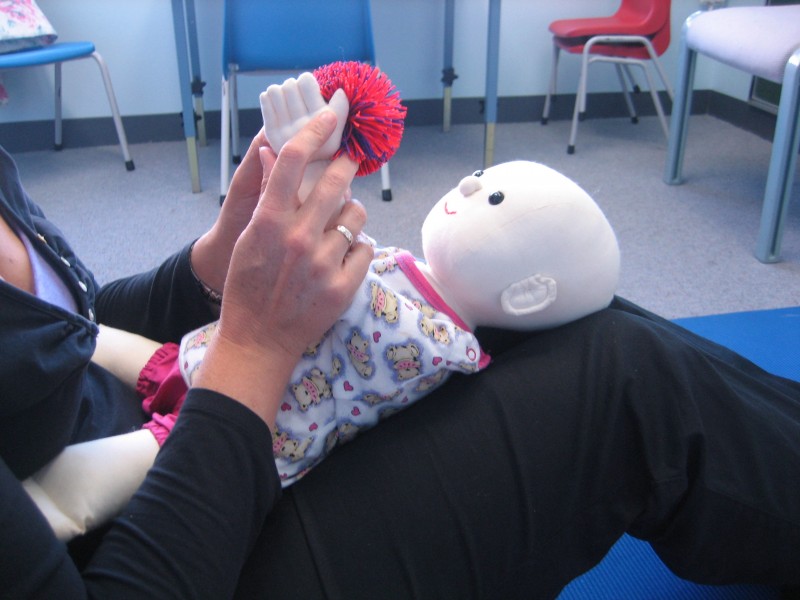
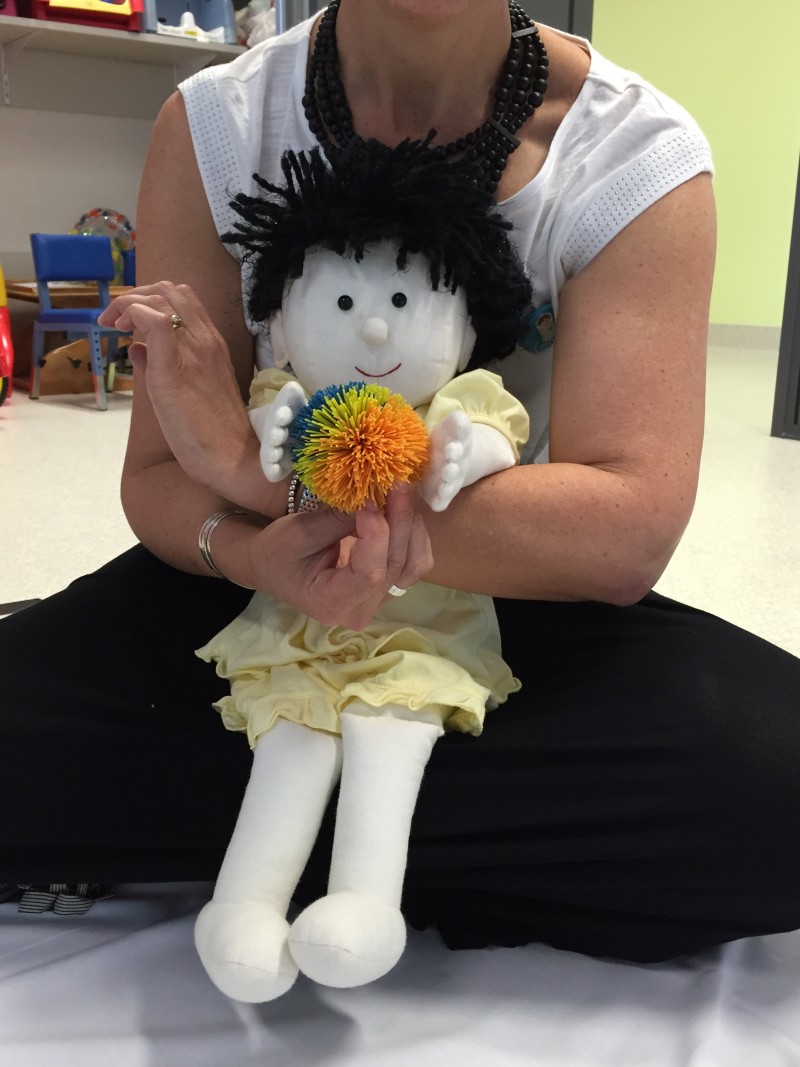
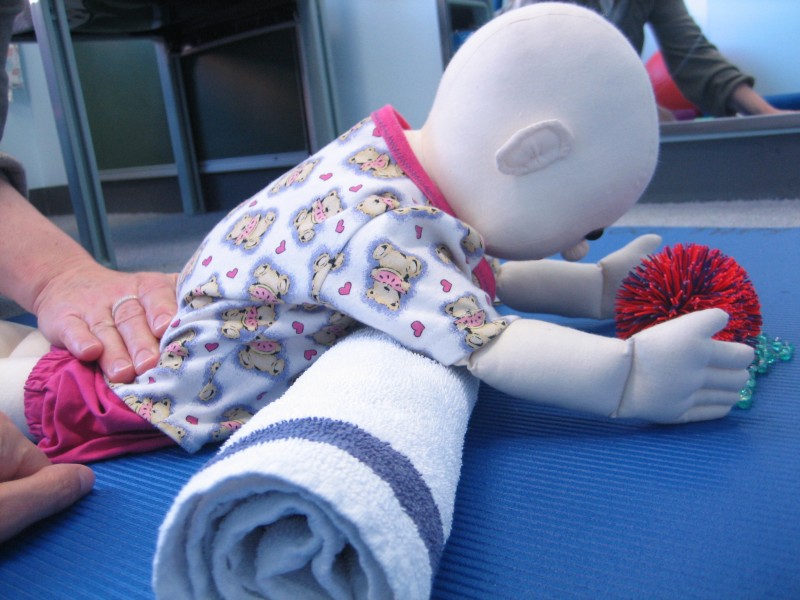
- Help bring hands into the visual field for awareness and play
- Eliminate unwanted movement and isolate hands for play
- Provide a sensory experience to help move and play
Everyday objects and bodies can be used as supports.
The photos below show three options for bringing the hands into the visual field. Positioning also eliminates unwanted movement and provides a high level of support to ensure success. The amount of support can be graded to provide the just right challenge.

- Talk to parents/caregivers about the principle of maximum support to ensure success in play. It is useful to explain the difference between positioning to support play and positioning to challenge movement and mobility. This will help them understand the goals behind positioning for play and to be able to generalise this into everyday play and handling at home.
- When working closely with other therapists (i.e. physiotherapist), it is important to discuss your goals together so sessions have opportunities to challenge movement abilities as well as provide opportunities for “play mastery”.
- Begin with maximum support reduce as the infant’s capability improves.
