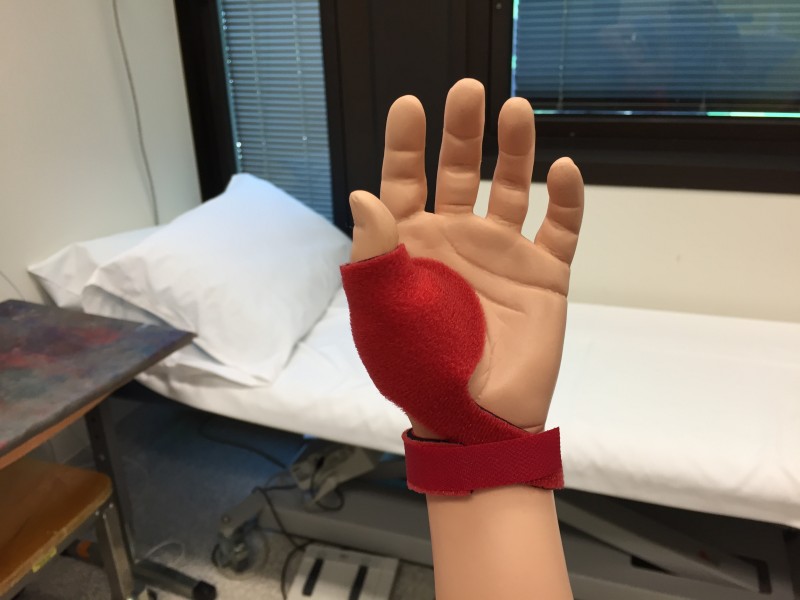
Introduction to splinting and casting
NOTE: Splinting/casting for the infant, constraint and bimanual therapy are specialist clinical areas with associated requirement for professional development. The following information is designed as a summary to provide basic information for the student or novice clinician
Splinting and casting are used to assist in the management of tone or in children born with underlying congenital conditions impacting on soft tissue length and bone/joint integrity.
Clinical opinion regarding splinting for infants can vary considerably between therapists.
Any decision to splint should take into account and balance:
- The need for the infant to feel and explore his environment and develop discriminatory tactile pathways.
- Skin integrity and underlying bony/soft tissue development of the infant
- The context for the infant e.g.:
- what can they do at rest versus play? Are limbs relaxed and open at rest?
- Is child irritable and using hands for self-settling?
- What active movement opportunities are possible?
- Is the splint likely to make a difference to occupational performance?
- Evidence regarding the developing brain (neuroplasticity).
- Evidence regarding effectiveness of splinting interventions
- Condition specific prevention of longer term patterns (e.g avoidance of tight pronators and long finger flexors in cerebral palsy)