
Choosing a toy for the infant
When choosing a toy for the infant it is important to consider the developmental and play stage of the infant, their fine and gross motor skills, the sensory and adaptive experience and motivation and mastery.
- Developmental and Play Stage of baby: what will be the baby’s common play theme? E.g. What will the child want to do with this toy – bang? Shake? Mouth? Toss?
- Fine Motor Skills: how will the child be able to hold this toy?
- Gross Motor Skills: what position will the child need to be in to use the toy? Is this possible?
- Sensory and Adaptive Experience: what will the baby feel/smell/see/hear when they play with this toy? Will this be too much to overwhelm to baby or not enough to engage/satisfy the baby?
- Motivation and Mastery: Is this toy appealing? Will the child be motivated and have delight playing with this toy?
Infants will engage and interact with the same toy in different ways as their development progresses. A block can be squeezed, sucked, shaken, stacked, banged against something, posted into a container or used as a pretend phone depending on the developmental stage of the child.
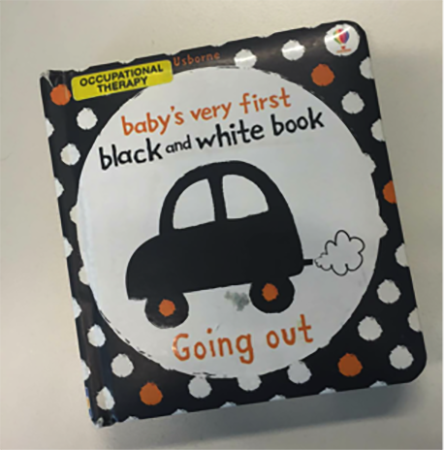
Black and white books are available from commercial bookstores
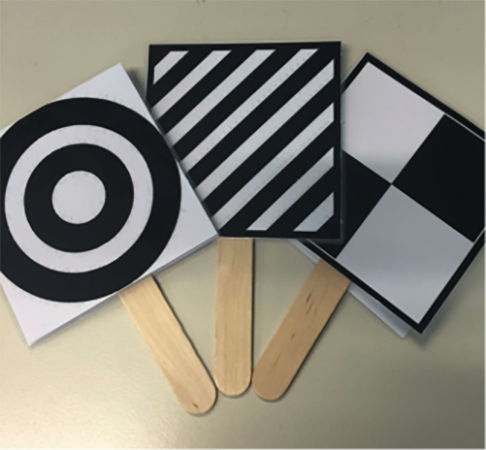
Laminated black and white paper stuck onto paddles
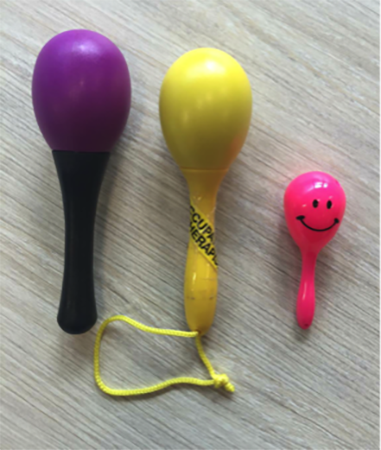
The Pink Rattle is much smaller and lighter than the other rattles pictured – leading to increased ease of use and a positive play experience for the very small infant.

- Newborns see best approximately 20-30cm in front of their face and are attracted to contrast (i.e. Faces and black and white books/toys/mobiles).
- Toys suitable for young (and premature) infants can be difficult to find and/or unsuitable in a clinical setting due to infection control reasons. Most infant rattles are too bulky for an infant hand and too heavy for the infant who is small, low-toned or unwell. Many have fabric components that are unable to be washed.
- Safety remains paramount when choosing a toy for a child and using this in a session.
