
Development of self-regulation/arousal
Self-regulation refers to the process of regulating the body systems to allow ongoing development and function. For the newborn, this means the ability to independently do the tasks that were previously done by mum’s body.
Self-regulation is not just about settling. It includes:
- maintenance of body temperature
- digestion/ feeding/ satiety and hunger
- sleep cycles
- regulation of arousal
- ability to self-calm and arouse self.
Self-regulation is a highly interactive process that is dependent on physiological maturation, caregiver responsivity and the infant’s adaptive ability.
See resources page for references
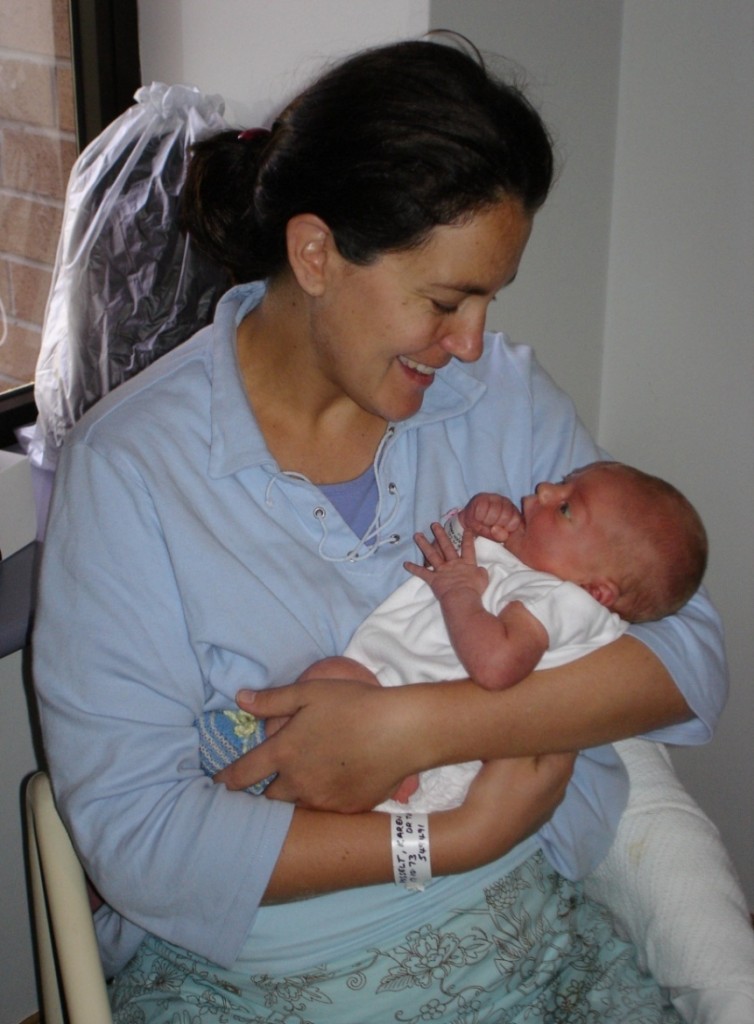
First Stage (approx. first few months)
- Caregiver facilitates physiological regulation and self-soothing.
- Caregiver learns to read cues and respond to infant.
The photo above shows Sophie only days after delivery. Mum has her contained in a hold that has allowed Sophie to suck on her hand and organise herself to reach a quiet alert state. She is then able to make eye contact with mum.
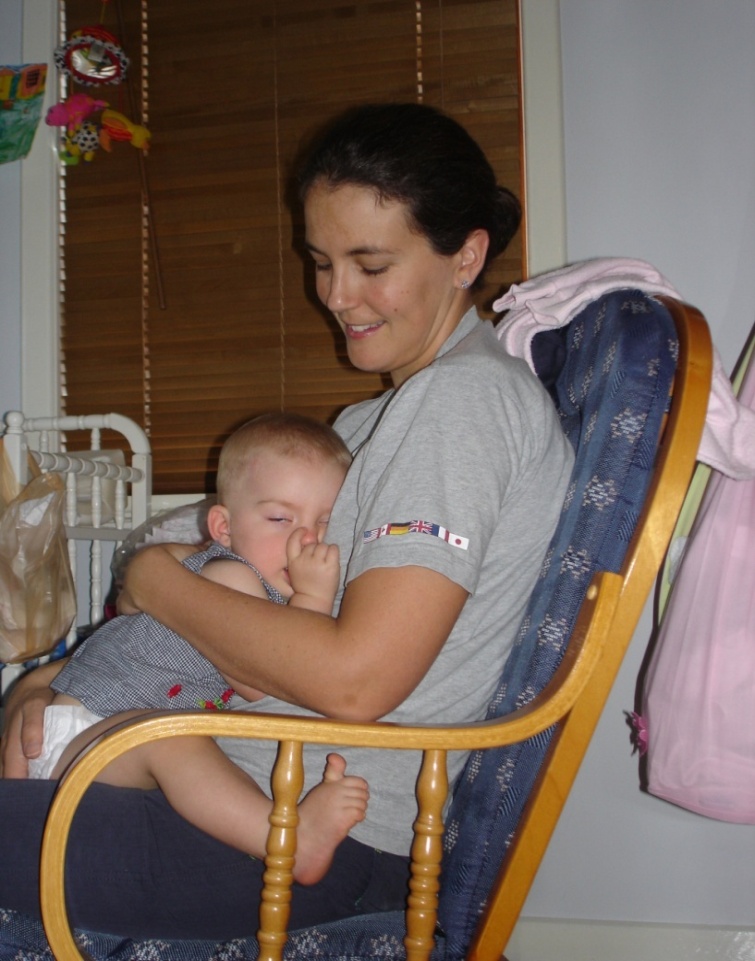
Second stage (~8-18 months)
- The infant takes some responsibility for own regulation of sleep, wake, soothing but still needs help from a caregiver.
- Development in cognitive skills allows infant to take cues from environment to assist in self-regulation.
The photo above shows Sophie at eight months of age. She can get her hand to her mouth independently and knows that sitting in the rocking chair means bedtime is approaching. She still needs mum to help her get ready for sleep.
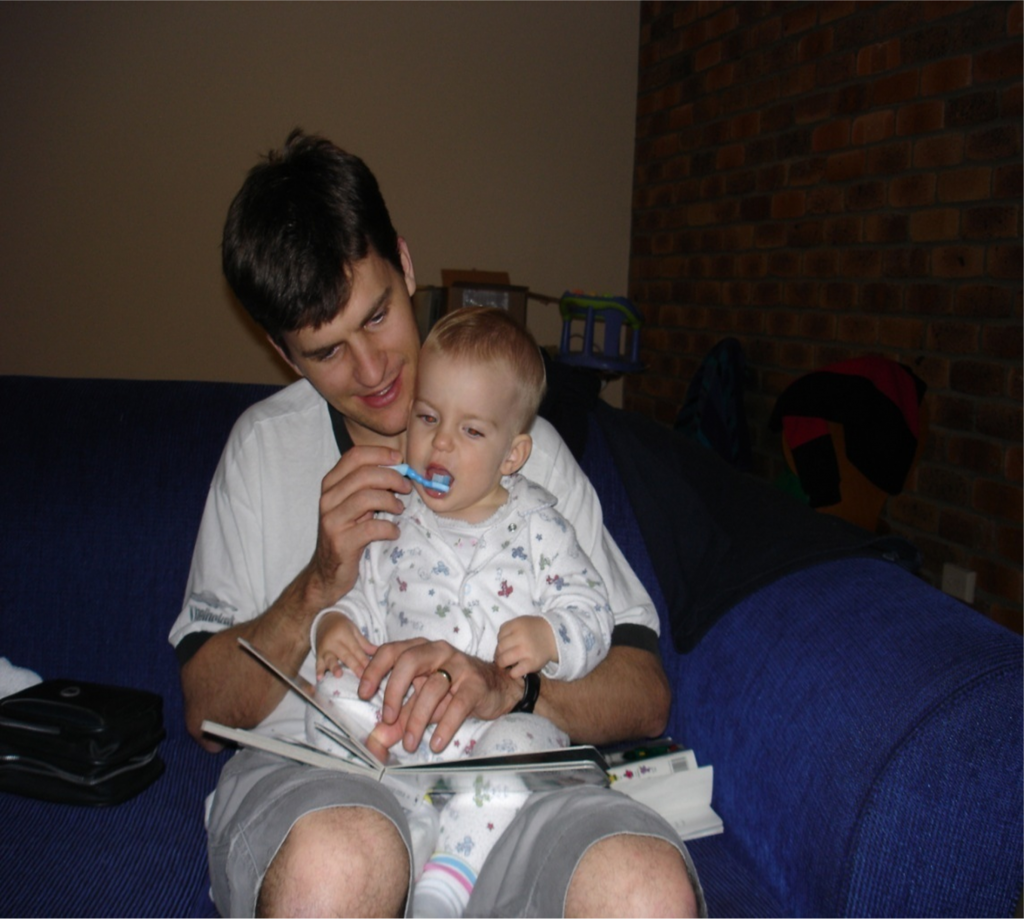
Stage three (~18 months+) Self-control
Further development in control through understanding of daily routines, words, gestures.
The photo above Sophie enjoys her bedtime story. It forms part of the cues she uses to help her get ready for sleep. This begins with dinner, then bath, then teeth cleaning and story. She copes well with going to sleep independently with the help of her pink piggy toy.
