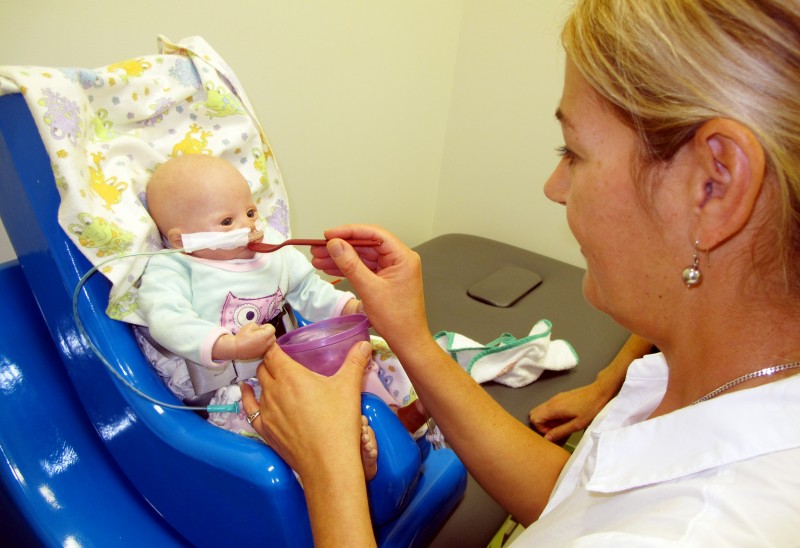
The occupational therapist’s role
Feeding is a significant co-occupation of early infancy (both and infant and parent role). A lot of time is spent engaged in this activity and parents place high importance on successfully nourishing their baby.
Successful feeding involves the complex interplay of many personal and environmental factors including:
- Developmental stage
- Physiological stability
- Structural abnormalities (e.g. G.I. and respiratory disorders)
- Neurological differences (e.g. low tone or cerebral palsy)
- The feeding experience
- Psychosocial environment (e.g. family functioning, previous experiences such as nasogastric tube)
- Parental knowledge of diet and nutrition
- Family beliefs and cultural practice
- Sensory responsiveness and preferences of child and family.
Occupational therapists have a unique knowledge base which can contribute to the management of feeding issues. These are commonly provided in the context of a multidisciplinary feeding team (in particular with speech pathologists). Here is one example of what a feeding team might offer.
For further information about the OT role with feeding and ideas on how to support a child’s engagement and success with feeding – see the Occupational Therapy Role in Feeding document.