
Imitation and turn-taking
Imitation is the foundation for infant learning and a powerful factor in the development of play, communication skills, social skills and movement. Babies exchange sequences of smiles and cooing by the second to third month. These preliminary turn-taking experiences develop further around 6 months with imitation of simple babble and actions (e.g. banging a spoon on the high chair). The baby’s attempts to imitate are reinforced by positive responses and engagement with the parent/caregiver.
Ideas to encourage imitation and turn-taking throughout your session:
- Copying a vocalisation that the baby makes, pause and watch for the baby’s reaction.
- Pause sufficiently to give baby the opportunity to respond and repeat.
- Talk to the baby about what the activity as you imitate e.g. say “bang bang”
- Joining in with the child’s interests or “following the child’s lead”. The aim is to encourage positive interaction through sharing the game.
Practice Notes:
- Look for attempts at imitation: before babies imitate, they will focus intensely on your actions or mouth. This is referred to as 'imitative intent'.
- Some babies who have problems with planning of oral movement may transfer their imitation attempts from sounds to actions e.g. will “bang” a rattle to the rhythm of modelled babble.
- If possible, work closely with the speech pathologist to discuss goals and approaches. Imitation and turn taking are fundamental speech and language goals as well as play goals. You may need to explain to parents that your goals are around play and that imitation is a pre-requisite for both play and language.
In the following video the baby watches the therapist's mouth with obvious imitative intent. She approximates a response using her tongue and voice. Her enjoyment of this game is clear.
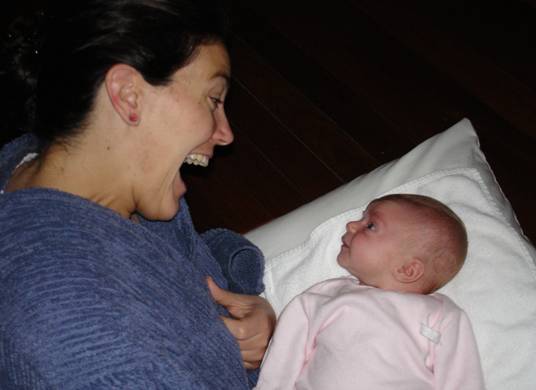
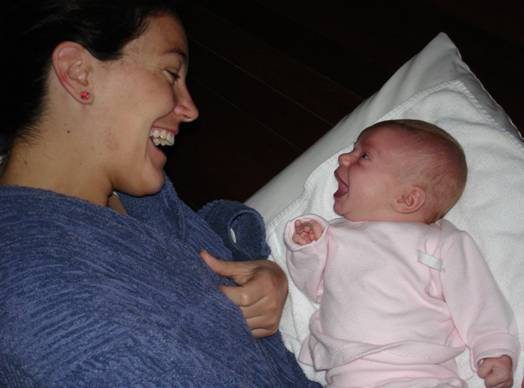
The photos above show an imitation sequence with a young infant. After watching her mother talk and smile, the infant responds with a similar wide smile. This is then reinforced by mum’s delight.
