
Splinting for infants with cerebral palsy and other neurological conditions
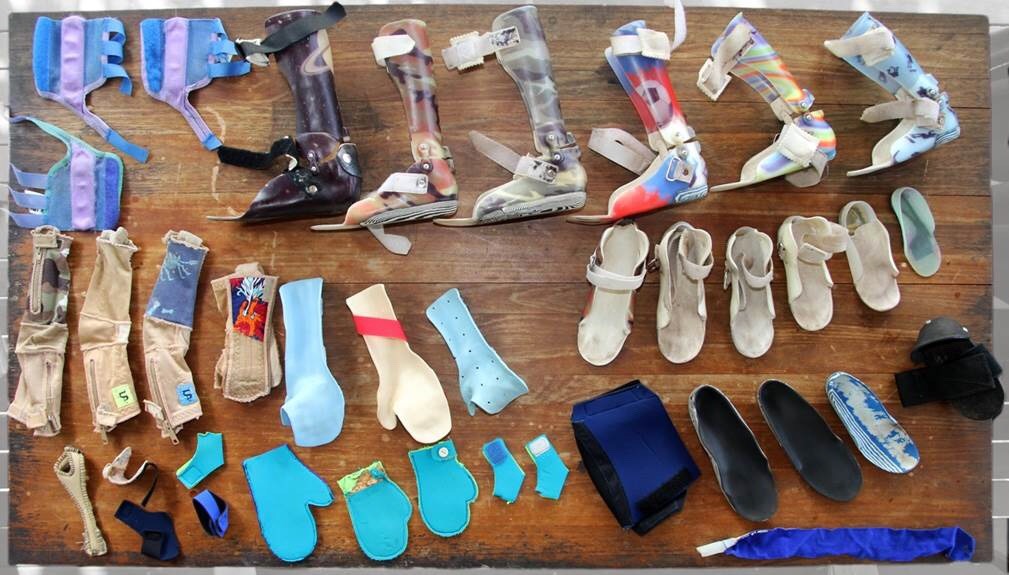
Splinting for infants with neurological conditions may be indicated if (for example):
- there is shortening or emerging shortening of muscles at rest
- splint will assist the infant to be more efficient or functional during activity.
Types of splinting include:
- hard splints (i.e. made from thermoplastic material)
- soft splints (e.g. made from neoprene)
- dynamic splints (e.g. lycra garments).
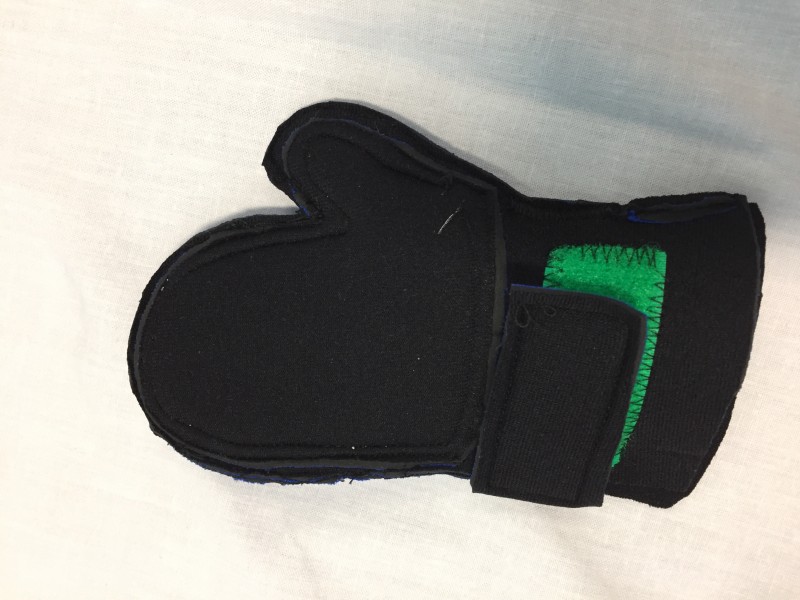
Constraint therapy is a treatment used increase the use of the involved hand in unilateral or asymmetrical cerebral palsy. The non-affected hand is blocked or constrained with a sock, mitt or tie on a long sleeve for short periods. The infant is then encouraged to use the affected hand using toys selected to encourage use. Constraint therapy has been shown to have some benefits for older children with cerebral palsy and there is emerging evidence for effectiveness in infants.
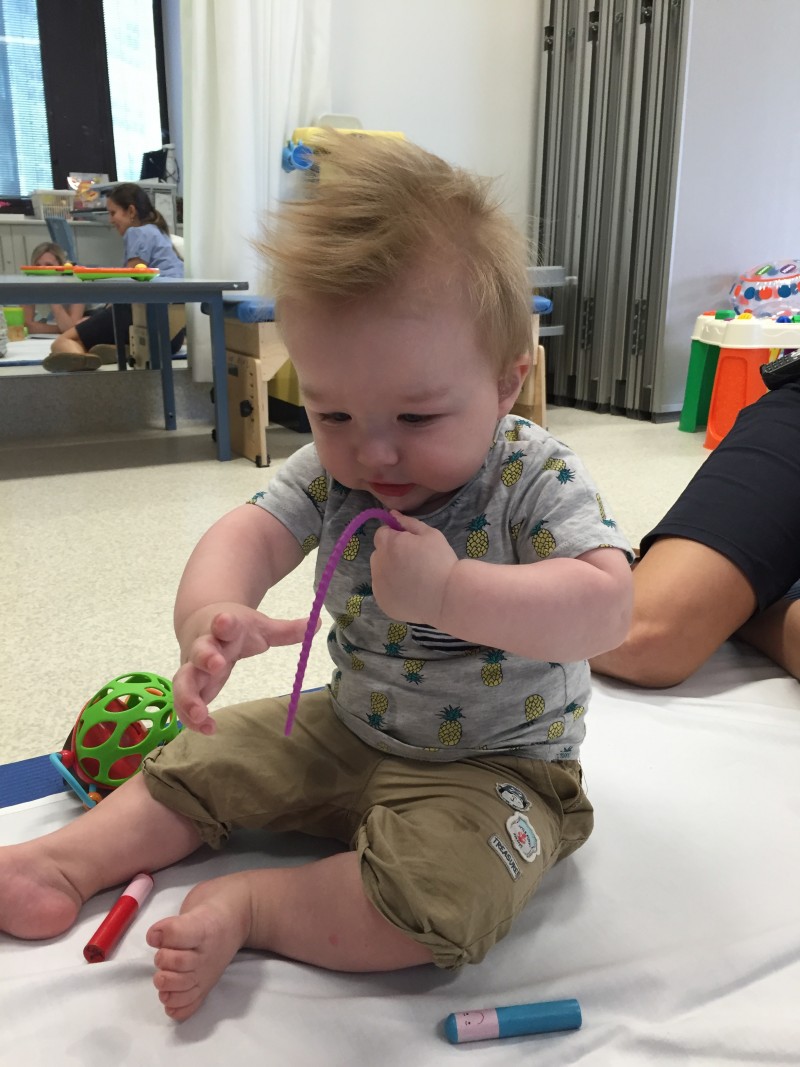
Bimanual therapy is a treatment approach used for infant who are at risk of or have a diagnosis of unilateral cerebral or asymmetrical cerebral palsy. It is based on models for older children with asymmetrical cerebral palsy which have been shown to have positive effects and there are currently studies in progress looking at efficacy for infants. The aim of bimanual therapy is (using carefully chosen two handed toys) to improve the function of the affected hand very early when neural plasticity may allow interventions to be more effective. 1. (Martin, 2011)
Assessments such as the Hand Assessment for Infants (HAI) and Mini-AHA (Greaves) provide detailed information and treatment planning direction for the development of bimanual skills. They require specialist training to administer and interpret.
