Mechanism of action
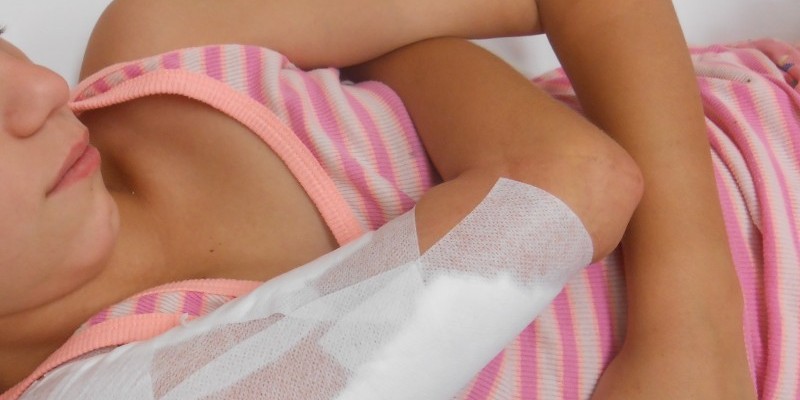
Splinting is used to support an optimal joint position by applying a low load, long duration stretch to oppose the contractile activity of myofibroblasts in a healing wound [5]. The decision to splint is typically made in conjunction with the multidisciplinary team based on your knowledge of the burn location, burn depth and child factors.
Babies and young children (unlike teenagers and adults) do not understand the need to oppose the contractile forces of a healing burn; or the ability to keep a joint still after skin grafting. Combined with the traumatic/painful nature of a burn, the child will naturally want to protect the area that has been injured. This protective positioning of a joint into typical flexed positions whilst a deep burn is healing can lead to biomechanical, functional and cosmetic deformities. See photo below.
For joints that are unable to be splinted, the child can be positioned (where possible) in play, sleep and during other tasks to promote the optimal position to protect underlying joints and soft tissue surrounding the healing burn (ie hips, neck, torso).
The following document, 'Options for positioning in PICU', provides some helpful practical advice.