
Introduction to oedema management
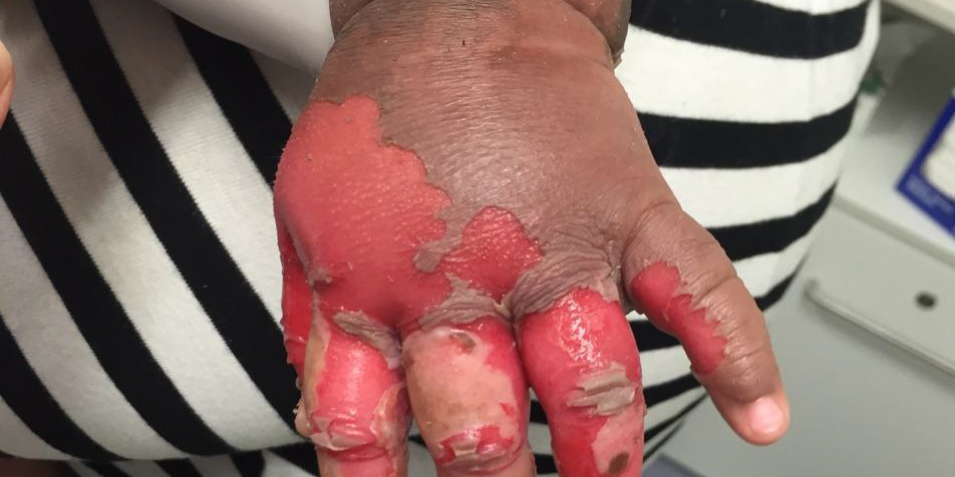
Oedema is common in the initial period after a deeper burn injury. This is due to an increase in capillary permeability leaking fluid from blood vessels across the capillary membrane and into to the damaged tissue.
Occupational Therapists use Oedema Management to:
- Reduce oedema formation through positioning and engagement in activity
- Promote the child’s active movement and participation
- Positively impact on wound healing, therefore reducing time to healing.
Within a paediatric context, factors contributing to oedema formation after a burn may include:
- Lack of movement in the affected limb due to the child’s pain or anxiety
- Protective positioning of the affected limb.
- Limb dependency
- Deep partial to full thickness depth burn

Key Point
Oedema develops within 8 to 12 hours after a burn and typically peaks in the first 36 hours. Failure to reduce oedema in the first 48-72 hours can result in a fixed deformity [1]
Oedema persisting after this initial inflammatory phase can become problematic. Excess fluid trapped within the extracellular space can:
- Hinder wound healing and contribute to wound depth conversion [2][3]
- Restrict movement abilities and functional participation of the child
- Cause pain and discomfort
- Position limbs/joints so that underlying structures are at greater risk of compression or shortening.
