Clinical Skills Development Service
Logged in as
My Account Log out

Module 2: Understanding a paediatric burn
Written by otuser on 11/10/2016. Posted in Uncategorized

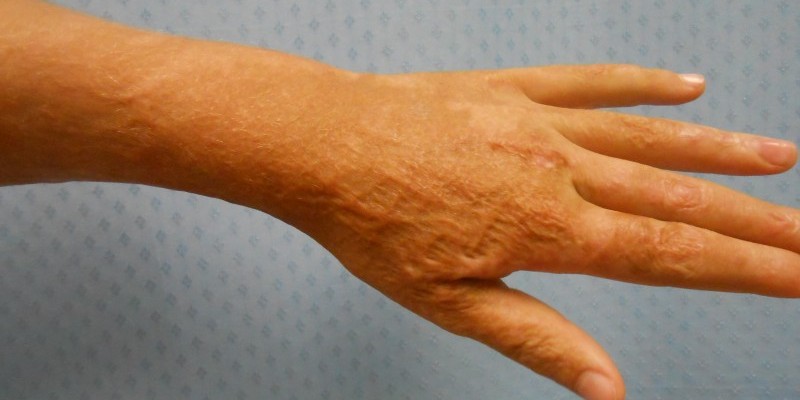
mature scar

Below are the topics associated with this module. Click through each topic to work through the module.

Lesson Topics
  • Welcome
  • Resources
  • Functions of our skin
  • What is a burn?
  • How does a child sustain a burn?
  • Physiological responses
  • Assessing a burn
  • Burn depth
  • Burn size
  • Healing a burn
  • Phases of healing
  • Burns dressings
  • Conclusion

← Previous Lesson

← Prev Next →
Queensland Government
© Metro North Hospital and Health Service through the Clinical Skills Development Service (CSDS) 2003 - 2026. All rights reserved.

Course navigation

Module 1: Introduction
  • Welcome
  • Acknowledgements
  • Starting the conversation
  • Going through treatment
  • Course resources
  • Conclusion
Module 2: Understanding a paediatric burn
  • Welcome
  • Resources
  • Functions of our skin
  • What is a burn?
  • How does a child sustain a burn?
  • Physiological responses
  • Assessing a burn
  • Burn depth
  • Burn size
  • Healing a burn
  • Phases of healing
  • Burns dressings
  • Conclusion
Module 3: Scar formation
  • Welcome
  • Resources
  • Principles of scar formation
  • How a scar may impact occupational performance
  • Defining burn scars
  • Scar severity
  • Features of a scar
  • Scar progression and maturity
  • Conclusion
Module 4: Pre-contact information gathering
  • Welcome
  • Resources
  • Collecting information
  • Communicating with the Child, family and referral source
  • Infection control
  • Conclusion
Module 5: Interpretation
  • Welcome
  • Resources
  • Impact on the family
  • A burn can cause sensory reactions
  • A burn disrupts a child’s typical occupations
  • Conclusion
Module 6: Assessment
  • Welcome
  • Resources
  • Assessment of the child
  • Assessment of the burn
  • Burn size
  • Burn depth
  • Introduction to pain assessment
  • Choosing a pain assessment
  • Introduction to scar assessment
  • Conducting a scar assessment using POSAS
  • Choosing a scar assessment
  • POSAS videos
  • Communication during a scar assessment
  • Conclusion
Module 7: Adherence to and mastery of paediatric burns interventions
  • Welcome
  • Resources
  • Engaging the child and family
  • Intervention approaches to assist child and family
  • Promoting child’s best performance with an anticipated painful experience
  • Procedural preparation strategies
  • Conclusion
Module 8: Oedema management
  • Welcome
  • Resources
  • Introduction to oedema management
  • Indicators to commence oedema management
  • Indicators to cease oedema management
  • Oedema management: positioning/elevation
  • Oedema management: activity participation/mobilisation
  • Oedema management: compression bandaging
  • Conclusion
Module 9: Scar management
  • Welcome
  • Resources
  • Indicators for scar management
  • Treatment approaches
  • General principles of pressure therapy
  • Using pressure therapy
  • General principles of contact media
  • Choosing a contact media product
  • Contact media: Regime and precautions
  • Indicators for scar massage
  • Using scar massage
  • General principles of cosmetic camouflage
  • Using cosmetic camouflage
  • Conclusion
Module 10: Splinting and positioning
  • Welcome
  • Resources
  • Introduction to splinting and positioning
  • Mechanism of action
  • Indicators for splinting and positioning
  • Contraindications
  • Indicators to modify splinting regime
  • Where is the place for splinting in burns?
  • Top tips and troubleshooting
  • Occupational performance considerations
  • Alternative to splinting: Kinesiotape use with hand burns
  • Conclusion
Module 11: Altered sensation and burn itch
  • Welcome
  • Resources
  • Why it's a concern
  • Indicators for intervention
  • The aim of intervention
  • Conclusion
Module 12: Looking and feeling different
  • Welcome
  • Resources
  • Why it's a concern
  • Indicators for intervention
  • The aim of intervention
  • Burns camp
  • Conclusion
Module 13: Return to childhood occupations
  • Welcome
  • Resources
  • Challenges
  • Returning to daily life
  • Consequences of missed school time
  • Indicators for intervention
  • The aim of intervention
  • Conclusion
Module 14: Documentation
  • Welcome
  • Resources
  • Introduction to documentation
  • How to document using SOAP
  • Documentation example
  • Conclusion
Module 15: Conclusion
  • Summary
  • Looking to the future
Return to Paediatric Occupational Therapy: Burns
Queensland Government
© Metro North Hospital and Health Service through the Clinical Skills Development Service (CSDS) 2003 - 2026. All rights reserved.
