
Promoting child’s best performance with an anticipated painful experience
Burns interventions can be painful for children with evidence suggesting higher pain levels experienced during burn wound care procedures can put people at an increased risk of adverse healing outcomes [1].
Burns literature advocates for the use of a combined pharmacological and non-pharmacological approach to pain management to ensure optimal physical and psychological recovery in both the short and long term participation in rehabilitation therapy [2]. Non-pharmacological approach to pain targets the affective pathways to impact the child’s cognition and emotion towards a potentially painful event. This includes anticipation of, preparation for and distraction during the upcoming procedure (See table).
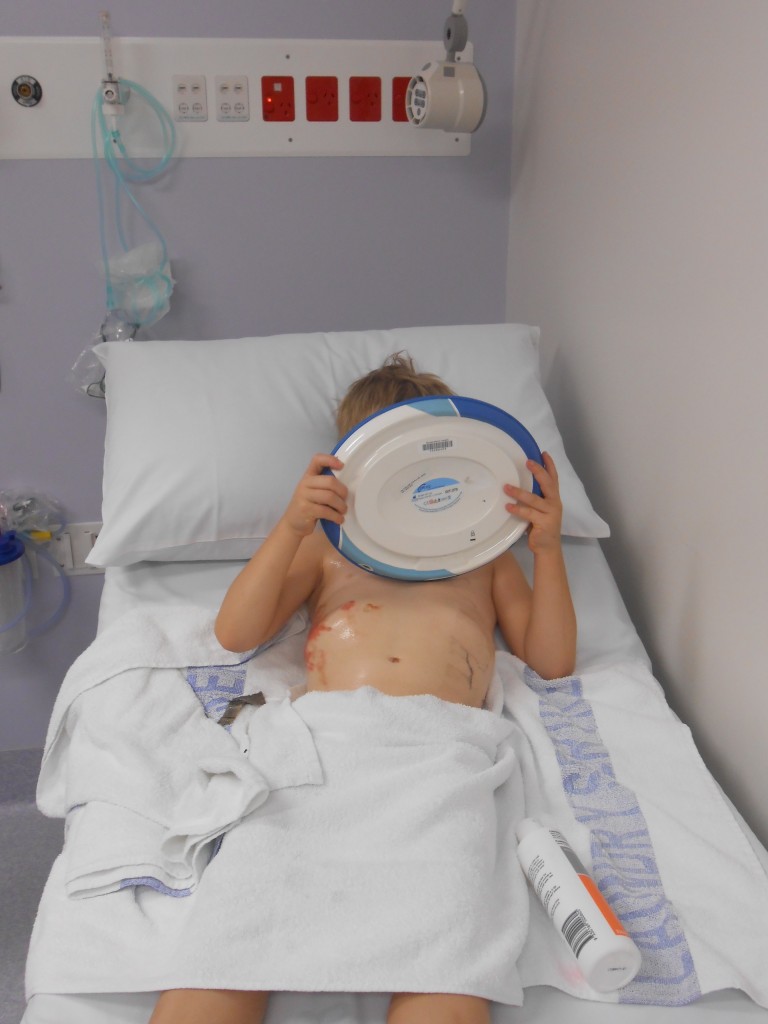

Key Point
Occupational therapy intervention works collaboratively with the multidisciplinary team to prepare children for procedures pertaining to their occupational role of 'patient'. The aim of this procedural preparation is to promote the child’s best performance as a patient and minimise anticipated anxious/painful experiences and positively influence wound healing and ultimately future scarring.
