
General principles of contact media
Contact media (silicones and hydrocolloid products) are commonly used after a burn that is anticipated to, or showing signs of developing a scar (i.e. burn taken over 3 weeks to heal).
Contact media have been used predominantly on hypertrophic scars since the 1980s and are typically used in combination with other scar management interventions [1] including pressure garment therapy, massage and sun protection.
Evidence describing how contact media works remains inconclusive however is thought to act by occluding and hydrating the skin, thus inhibiting fibroblast proliferation.
Despite the lack of evidence confirming the mechanism of action of silicone and hydrocolloid products and this remaining an ongoing point of clinical discussion within burns literature; contact media continues to be commonly used as a scar management intervention due to some documented effectiveness in:
- helping to soften, flatten and smooth scars [11] [12] [13][14]
- reducing scar thickness, pigmentation, colour and texture[7] [3][10][13]
- reducing pain and itch associated with burn scarring [7][15]
Clinical guidelines outlining silicone effectiveness are based on broader scar research due to lack of evidence regarding effectiveness using burn research alone. See resources section for further information including a systematic review of the evidence for silicone gel sheeting products and clinical practice guidelines for the application of silicone and non-silicone products after a burn.
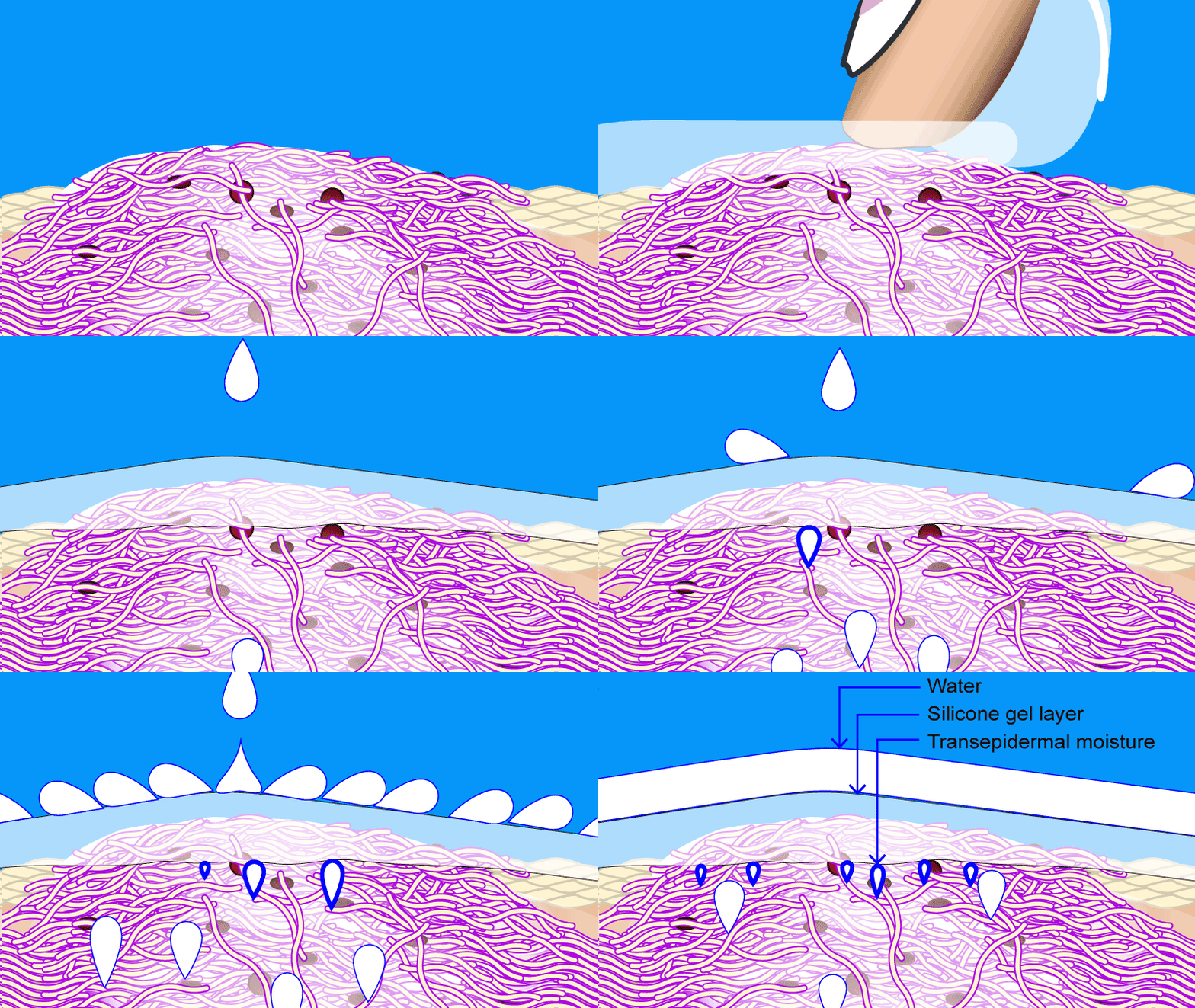
The interaction below shows the application of a silicone gel product over a scar. When applied correctly, water will bead off the silicone product, and create a barrier to reduce trans-epidermal moisture loss from the scar [2] .

Key Point
For further reading and discussion regarding the evidence for silicone gel sheeting products in the treatment of hypertrophic and keloid scars see the Silicone Gel Sheeting Cochrane Review. There are also a variety of resources in the Resource section of this module.
