A burn disrupts a child’s typical occupations

Key Point
Children adopt a new occupation of 'patient' in order for them to manage the tasks associated with burns treatment and intervention.
Depending on the depth of burn and intervention required, some children adopt this role for a period of weeks to months, whilst for others this occupation will be with them for years, continuing into adulthood.
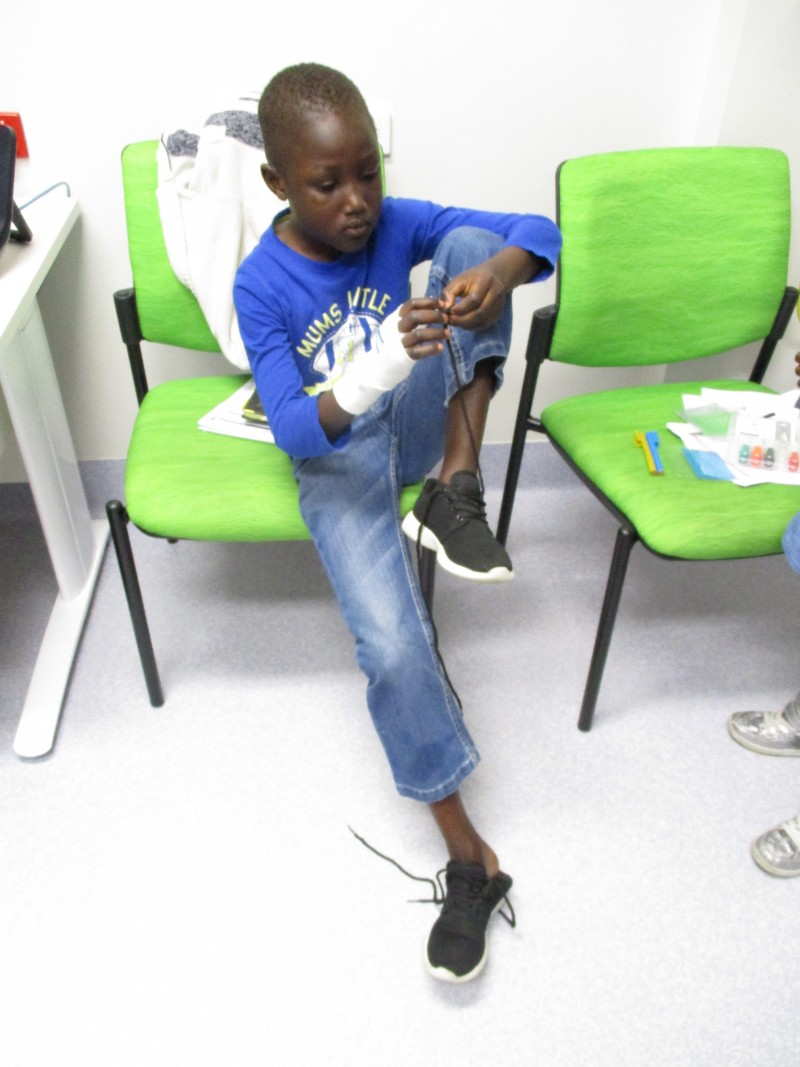
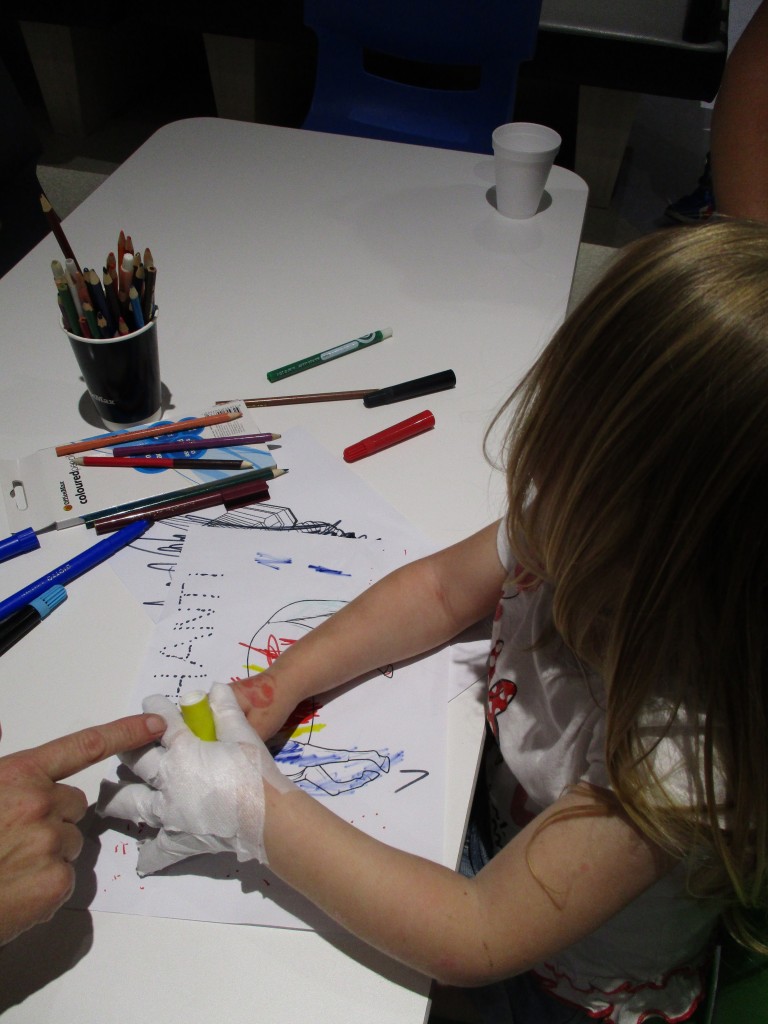
After a burn, a child’s typical occupations may be impacted. Play can be restricted by dressings and/or a splint.
Rest/sleep can be impaired due to the pain/altered sensations of the burn/trauma of injury or inability of the child to touch/feel their sleep toy. Productivity and learning at school can be impacted due to need to travel regularly for appointments at the hospital. Engaging with peers as a friend/teammate can be impacted as the child is away from their community and social networks or unable to participate due to restrictions from dressings, wounds or scarring. Self-care tasks may take longer or be unable to be completed without a caregiver to provide assistance.
Some children will adopt and transition into this new role easier than others and is typically dependent on:
- previous hospital/traumatic/painful experiences
- pre-morbid temperament/personality
- developmental stage and understanding of the injury and treatment involved
- family / cultural factors
The following document outlines occupational performance considerations for the child following a burn across the domains of sleep/rest, play/leisure, productivity, self-care, self-regulation/interaction and engagement: Occupational performance considerations after a Burn.
Determining and recording these impact can be completed on the Burns Initial Assessment Form.