
Functions of our skin
Skin is the body’s largest organ. It is responsible for many functions including [1]:
- protection of vital organs and structures against mechanical impacts, pressure and exposure to micro-organisms and chemicals/radiation (i.e. sun)
- regulation of body temperature and homeostasis of water and fat stored within the body
- sensation through registering and interpreting tactile input from the environment
- physical appearance through facial expressions and defining physical features.
Our skin is divided into three main layers (which is explored further below). Each layer contains unique anatomical features contributing to the overall physiological function of the skin.
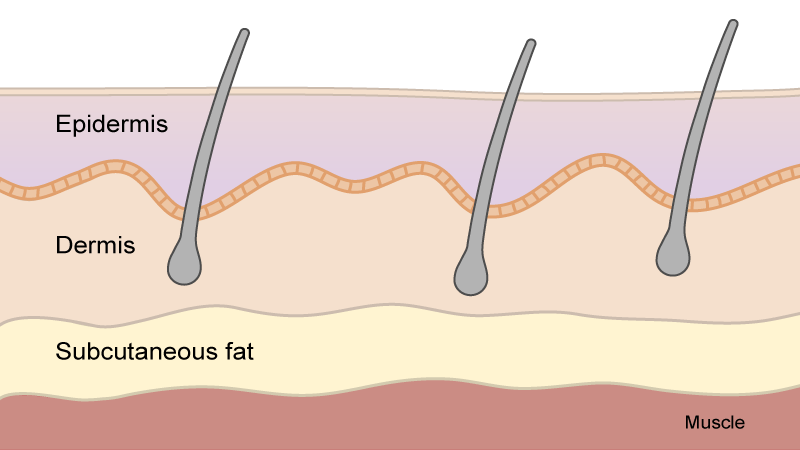
The three main layers of the skin
Skin is the body’s largest organ. It is responsible for many functions including [1]:
- protection of vital organs and structures against mechanical impacts, pressure and exposure to micro-organisms and chemicals/radiation (i.e. sun)
- regulation of body temperature and homeostasis of water and fat stored within the body
- sensation through registering and interpreting tactile input from the environment
- physical appearance through facial expressions and defining physical features.
Our skin is divided into three main layers (which is explored further below). Each layer contains unique anatomical features contributing to the overall physiological function of the skin.
