
Alternative to splinting: Kinesiotape use with hand burns
Appropriate management of hand burns is imperative in preventing contracture, maximising function and a child’s participation in meaningful occupations. Splinting, whilst effective in contracture management can temporarily impede a child’s functional hand use. Where appropriate, Kinesio taping is used as an alternative to splinting.
Kinesiotape ® (or kinesiology tape) is a latex free tape that conforms to the body and does not restrict movement [1].
Method of action:
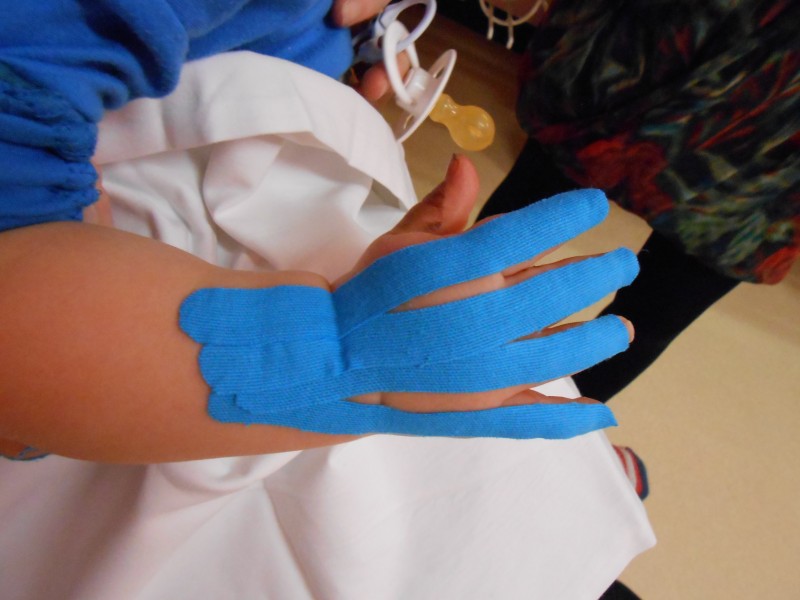
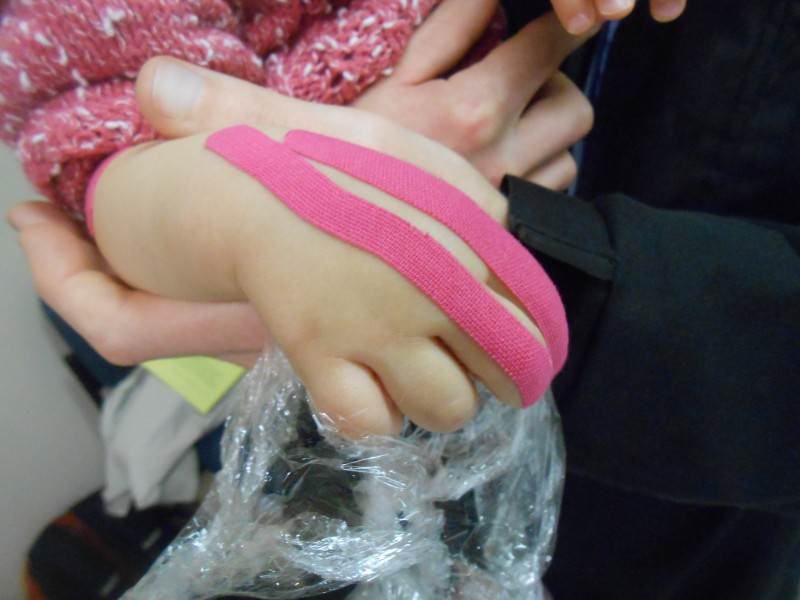
Applying kinesiotape to the extensor surface of the hand/wrist will promote movement in the opposite direction to the contractile forces of a healing burn.
For example:
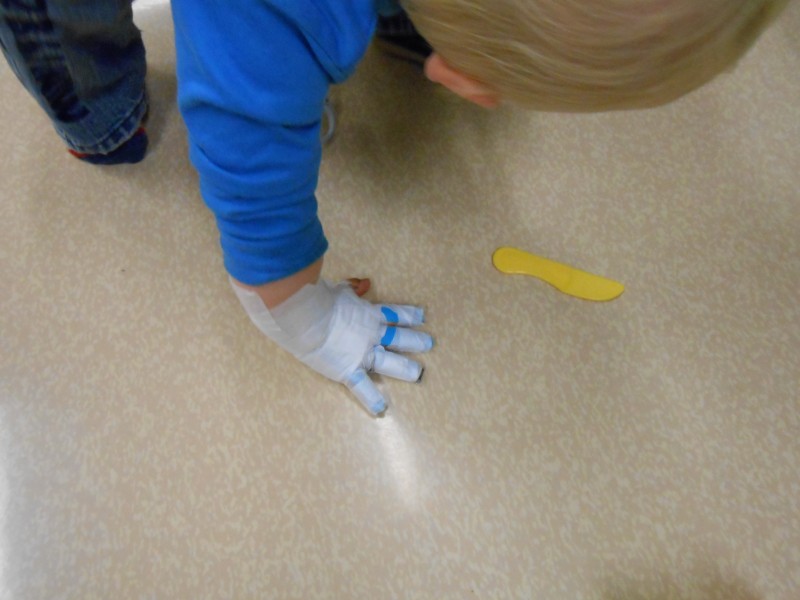
1yo boy with partial thickness contact burn to his palm and palmar aspect of his fingers and demonstrating minimal active use of his hand in play and feeding activities. Kinesiotape was applied to the unaffected skin over the dorsum of his hand to promote finger extension and allow functional use of his hand in play as an alternative to being splinted (see photographs). Burns dressings were applied to the area of burn and secured over the top of the kinesiotape. Close monitoring occurred through outpatient clinic to:
- ensure child not losing range from protective positioning of this hand (into a fist) whilst healing
- monitor play, movement patterns and functional use of this hand
- ensure no skin reactions to the use of kinesiotape.
There is currently minimal evidence to support the use of kinesiotape as an alternative to splinting in a paediatric burn population; despite evidence that kinesiotape can be used for improving active range of motion, adjusting misalignment, maintaining preferred body alignment, facilitate or inhibit muscle function, support joint structure, provide proprioceptive feedback and improving lymphatic circulation1,2; and has been used in other areas of paediatric rehabilitation (i.e. cerebral palsy, obstetric brachial plexus).
Perceived clinical benefits of kinesiotape as an alternative to splinting include:
- Restricting prolonged flexion positioning whilst allowing typical use of the hand.
- Allowing typical sensory input as the manipulating surface of skin is not covered.
- Reducing oedema formation due to active use of muscle pumps
- Assisting with mobilising scar tissue.
For more information/guidance, see the article 'To Tape or Not To Tape? Innovative use of Kinesiotape in children's hand burns'.

Children with burns with the following features are not appropriate for Kinesio Taping:
- Superficial/Partial thickness depth where child is maintaining full AROM
- Tendon involvement
- Wounds/unhealed skin over site of application
- Limited sensation
- History of or tape allergies/skin sensitivity to taping
- Excessive sweating in affected area (impacts adherence of tape)
- Negative reaction to test strip including
- Prolonged redness
- Skin rash
- Itching
- Blistering (in severe cases)
Therapists should be trained in the correct application of kinesiotape prior to applying on children.
