
What is simulation?
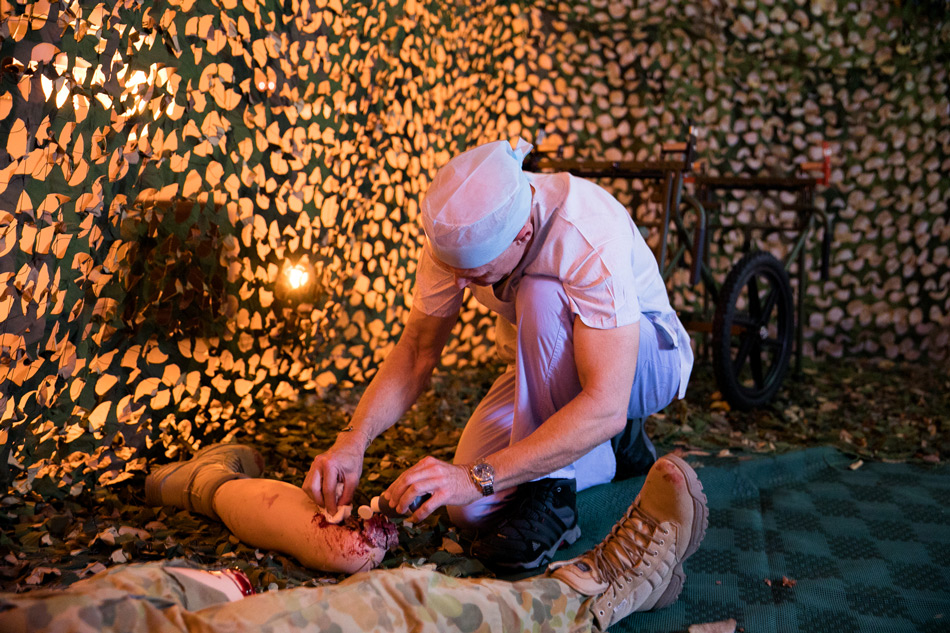
'A technique that creates a situation or environment to allow persons to experience a representation of a real event for the purpose of practice, learning, evaluation, testing, or to gain understanding of systems or human actions.'1
'A technique that creates a situation or environment to allow persons to experience a representation of a real event for the purpose of practice, learning, evaluation, testing, or to gain understanding of systems or human actions.'1
Simulation is a technique, not a technology.2 It allows us to replicate real-life randomness and ensure safety of participants and patients. Simulation is widely used in industries that require efficient and effective responses to high-risk situations.2
A simulation based education event aims to improve the knowledge, skills and behaviours in a replicated environment, and provides a range of learning opportunities to:
- replicate invasive or low frequency/high risk events
- adapt the scenarios to suit the experience, ability and working environment of the group
- assess technical skills
- allow different disciplines to practice working together to enhance critical elements of effective teamwork such as communication, leadership, situation awareness, managing workloads and resources
- test and train on new equipment and technologies in a safe environment
- provide effective feedback and give participants time to reflect on outcomes.
1.Lopreiato J O. Healthcare Simulation Dictionary. Rockville, MD: Agency for Healthcare Research and Quality; October 2016. AHRQ Publication No. 16(17)-0043. Available from: http://www.ssih.org/dictionary
2.Gaba, David M. MD: The Future Vision of Simulation in Healthcare Simulation in Healthcare: July 2007 - Volume 2 - Issue 2 - p 126-135 doi: 10.1097/01.SIH.0000258411.38212.32. Available from: https://journals.lww.com/simulationinhealthcare/Fulltext/2007/00220/The_Future_Vision_of_Simulation_in_Healthcare.8.aspx
