
Technical skills, non-technical skills and human factors
Simulation provides a platform for greater understanding and exploration of individual, team and system performance.
To assist in this understanding, simulation synthesises theoretical and practical learning experiences, and creates an opportunity to optimise how work is done.
True improvement requires integration of:
- an individual's performance of a skill (technical skills)
- a team's performance and behaviour (non-technical skills)
- the whole system's performance and effectiveness (optimisation of the Human Factors).
Interact with the boxes below
Technical skills
'A skill that is required for the accomplishment of a specific task. In healthcare, the knowledge, skill and ability to accomplish a specific medical task; for example, inserting a chest tube or performing a physical examination.'1
Non-technical skills
‘In the healthcare field, the skills of communication, (patient-provider, team) leadership, teamwork, situational awareness, decision-making, resource management, safe practice, adverse event minimization/mitigation, and professionalism; also known as behavioural skills or teamwork skills.’1
Human factors
‘The discipline or science of studying the interaction between humans and systems and technology; it includes, but is not limited to, principles and applications in the areas of human engineering, personnel selection, training, life support, job performance aids, and human performance evaluation.’1
Simulation provides a platform for greater understanding and exploration of individual, team and system performance.
To assist in this understanding, simulation synthesises theoretical and practical learning experiences, and creates an opportunity to optimise how work is done.
True improvement requires integration of:
- an individual's performance of a skill (technical skills)
- a team's performance and behaviour (non-technical skills)
- the whole system's performance and effectiveness (optimisation of the Human Factors).
Interact with the boxes below
Technical skills
'A skill that is required for the accomplishment of a specific task. In healthcare, the knowledge, skill and ability to accomplish a specific medical task; for example, inserting a chest tube or performing a physical examination.'1
Non-technical skills
‘In the healthcare field, the skills of communication, (patient-provider, team) leadership, teamwork, situational awareness, decision-making, resource management, safe practice, adverse event minimization/mitigation, and professionalism; also known as behavioural skills or teamwork skills.’1
Human factors
‘The discipline or science of studying the interaction between humans and systems and technology; it includes, but is not limited to, principles and applications in the areas of human engineering, personnel selection, training, life support, job performance aids, and human performance evaluation.’1
Resources
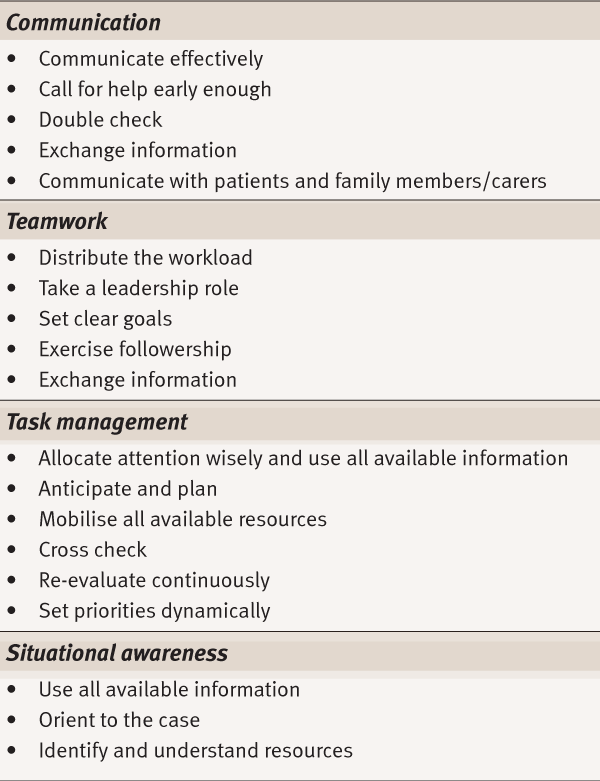
The following table displays elaborations on the ‘non-technical’ skills that need to be considered in simulation education events.
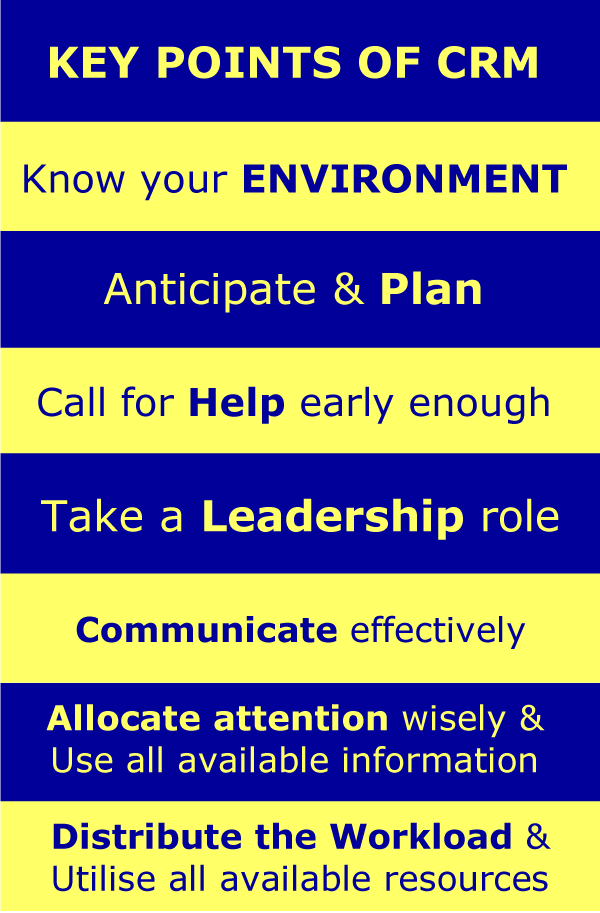
A common framework that can be used is the ‘The Stanford 7’
1. Lopreiato J O. Healthcare Simulation Dictionary. Rockville, MD: Agency for Healthcare Research and Quality; October 2016. AHRQ Publication No. 16(17)-0043. Available from: http://www.ssih.org/dictionary
