
Human resources
Roles in simulation can be difficult to define as facilitators are often required to understand and be able to perform a number of roles when delivery simulation education events. For example faculty involved in simulation are required to have both clinical and training expertise.
Faculty have the key role in a simulation event to ensure learning objectives and outcomes are achieved. Other responsibilities may include:
- Planning, organising and conducting the simulation event to the level of fidelity required,
- Ensuring all administration management tasks are performed prior to, and after, the event,
- Overseeing the control room and ensuring simulation areas are set up before the event including props, characters, manikin or patient with moulage, as well as the control room, AV and other technical equipment, and
- Preparing for and conducting the debriefing, ensuring that the room has been set up.
The role of Simulation Coordinators is to work alongside faculty in facilitating the course. Their responsibilities can include:
- Preparation and clean-up of rooms, manikins and props,
Control of the manikin via console operation, - Operation of the AV equipment,
- Liaising with lead faculty regarding simulation event,
- Monitoring the simulation event script progress, and
- Assisting in the debriefing scenario.
Remove - (Faculty text reference only as edits applied to above)
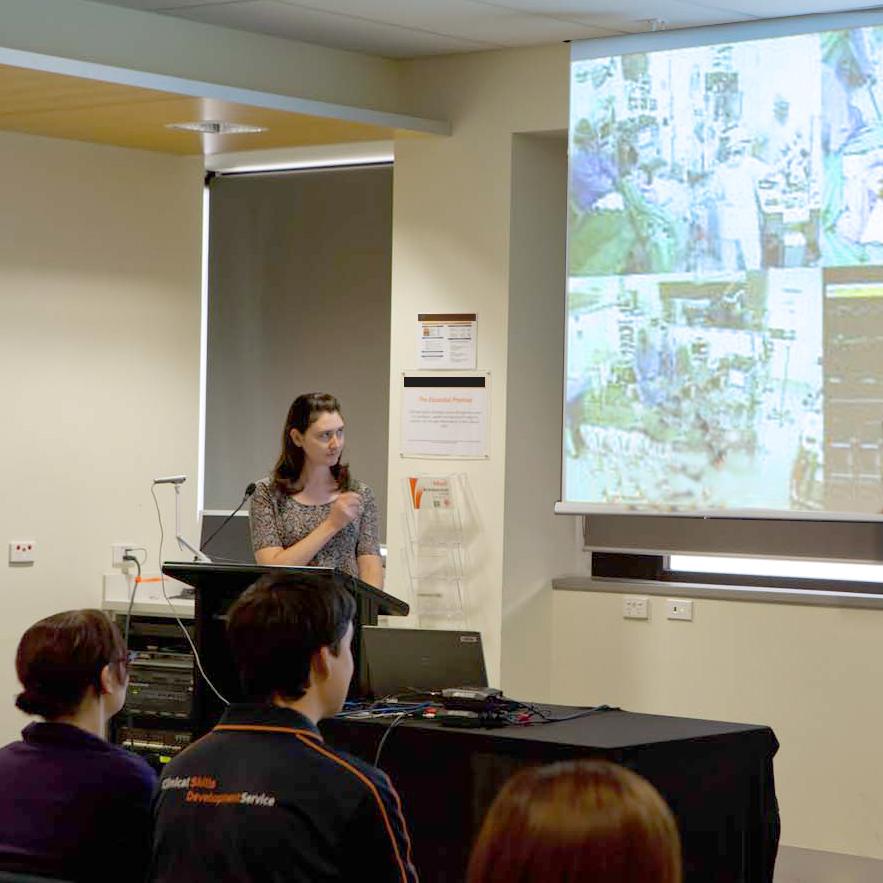
Faculty involved in simulation are required to have both clinical and training expertise and their key role in a simulation event is to ensure learning objectives and outcomes are achieved. Other responsibilities may include:
- Planning, organising and conducting the simulation event to the level of fidelity required,
- Ensuring all administration management tasks are performed prior to, and after, the event,
- Overseeing the control room and ensuring simulation areas are set up before the event including props, characters, manikin or patient with moulage, as well as the control room, AV and other technical equipment, and
- Preparing for and conducting the debriefing, ensuring that the room has been set up with appropriately positioned seating.
Simulation Coordinators
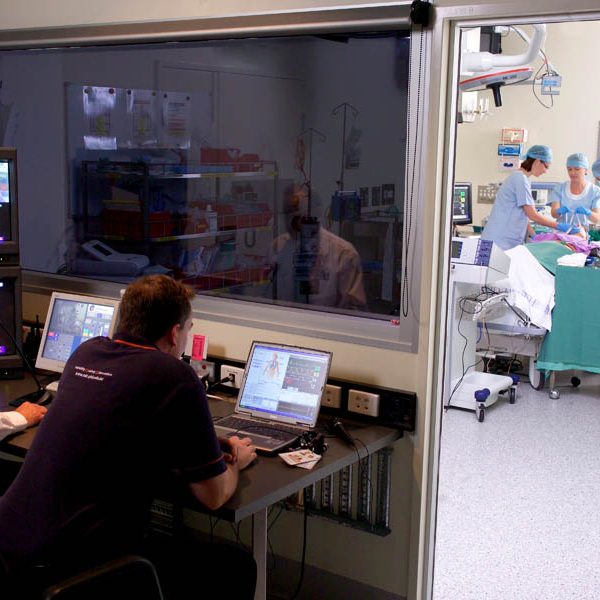
The role of Simulation Coordinators is to work alongside faculty in facilitating the course. Their responsibilities can include:
- Preparation and clean-up of rooms, manikins and props,
- Control of the manikin via console operation,
- Operation of the AV equipment,
- Liaising with lead faculty regarding simulation event,
- Monitoring the simulation event script progress, and
- Assisting in the debriefing scenario.
Role players
Simulation events may require role players, confederates, standardised or simulated patients, to ensure fidelity.
Confederates
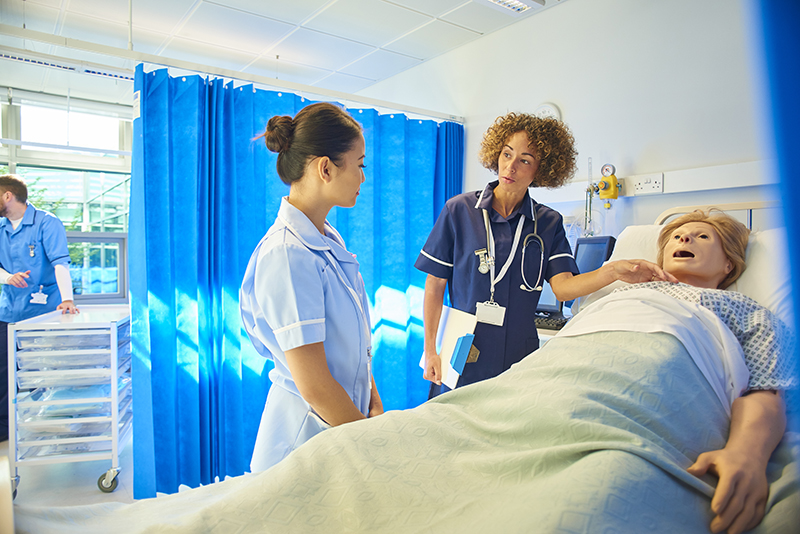
Confederates are actors used in simulations to give support and guidance to participants as a scenario unfolds, and can provide
- real time clarification and additional details that are otherwise difficult to reproduce, such as the temperature or skin colour of a manikin.
- a level of supervision to prevent any workplace health and safety issues or damage to the manikin, and
- an extra level of realism by providing an intervention or performing character roles to introduce new information or escalate events in a scenario.1
Standardised patient
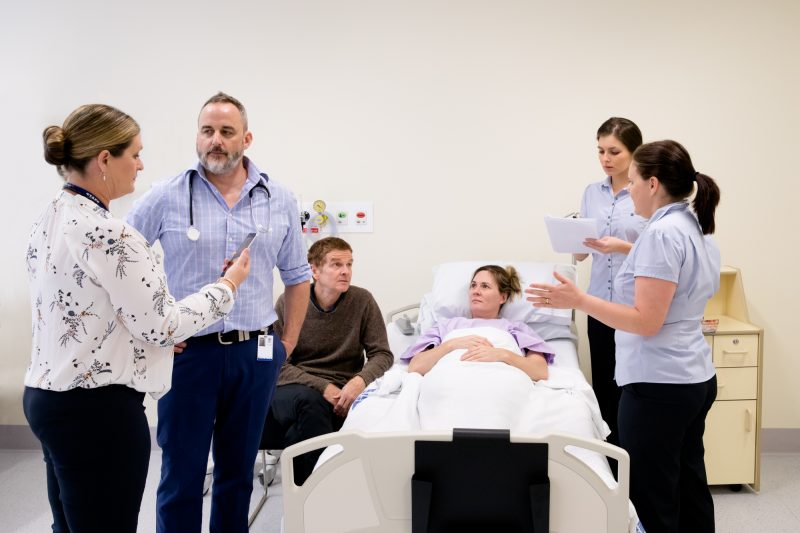
Standardised, or simulated, patients are ‘people trained to model the mannerisms and complaints of real patients’.2 Standardised patients are proficient in simulating the symptoms and emotional states of actual patients, and the encounters allow students to learn about situations they may not be able to manage alone in a real clinical setting.
For more information, go to the Simulation Patient Network website.
1. Lopreiato, J. O. (Ed.), Downing, D.,Gammon, W., Lioce, L., Sittner, B., Slot, V., Spain, A. E. (Associate Eds.), and the Terminology & Concepts Working Group. (2016). HealthcareSimulation Dictionary. Retrieved from http://www.ssih.org/dictionary.
2. Sevdalis, N. 2013. Non-technical Skills and the Future of Teamwork in Healthcare Settings. The Health Foundation
