
Frames and bias
Frames
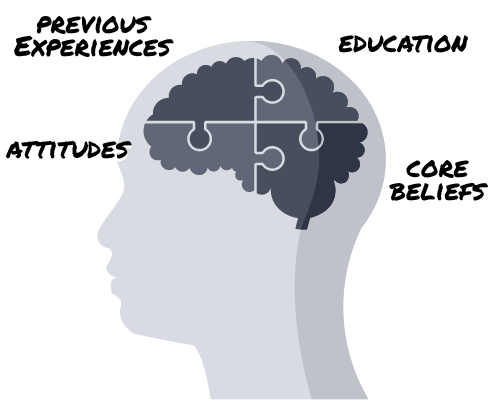
Your mental frames establish a mindset or opinions that you have formed about something through previous experiences, education, core beliefs and attitudes.
It is important to acknowledge that these frames can predetermine your interpretations and responses when leading a facilitated discussion. The challenge for all facilitators is to maintain a neutral stance while facilitating any event.
Your frames:
- tend to form quickly, but are resistant to change
- help determine your actions and behaviours
- affect your personal development and performance
Frames
Your mental frames establish a mindset or opinions that you have formed about something through previous experiences, education, core beliefs and attitudes.
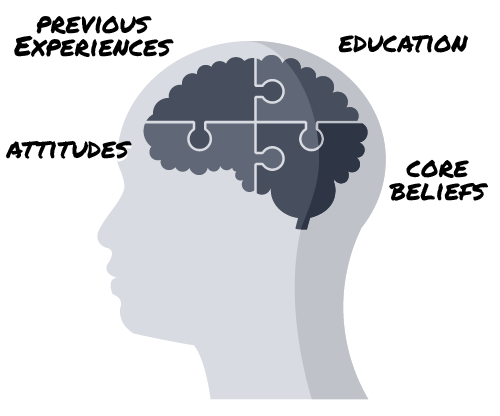
It is important to acknowledge that these frames can predetermine your interpretations and responses when leading a facilitated discussion. The challenge for all facilitators is to maintain a neutral stance while facilitating any event.
Your frames:
- tend to form quickly, but are resistant to change
- help determine your actions and behaviours
- affects your personal development and performance
Bias
A bias is described as an inclination or a prejudice for or against a certain decision.1 It is a limitation in our thinking based directly on our personal core beliefs.
Like frames, facilitators need to be mindful of personal biases and the affect they may have during facilitation.
Lets look at some biases facilitators need to be aware of when conducting system and safety exercises.

The tendency to favor one's own group.

Tendency to see patterns in random events.

Expecting a person to have certain qualities without having real information about the person.

Allowing our expectations to influence how we perceive an action.
Learn more about Frames and Bias on our Cognitive Biases course.
Learn more about Frames and Bias on our Cognitive Biases course.
1 Hammond et. al. (1998) The Hidden Traps in Decision Making. Harvard Business Review. Available from: https://hbr.org/1998/09/the-hidden-traps-in-decision-making-2
