
Advanced Life Support (ALS)
Advanced Life Support (ALS) online learning will be down for scheduled maintenance between 22 - 23 October.
CSDS has recently revamped the online learning component of our ALS course. For this reason, the ALS online learning course will be unavailable between 22 and 23 October for this scheduled maintenance. We will take this time to update it to the new and improved online learning experience for you.
What this means for you
This update will affect your progress in the course, so we recommend either completing the course prior to this date or waiting until after the update.
For any further enquiries please contact CSDS support
[email protected]
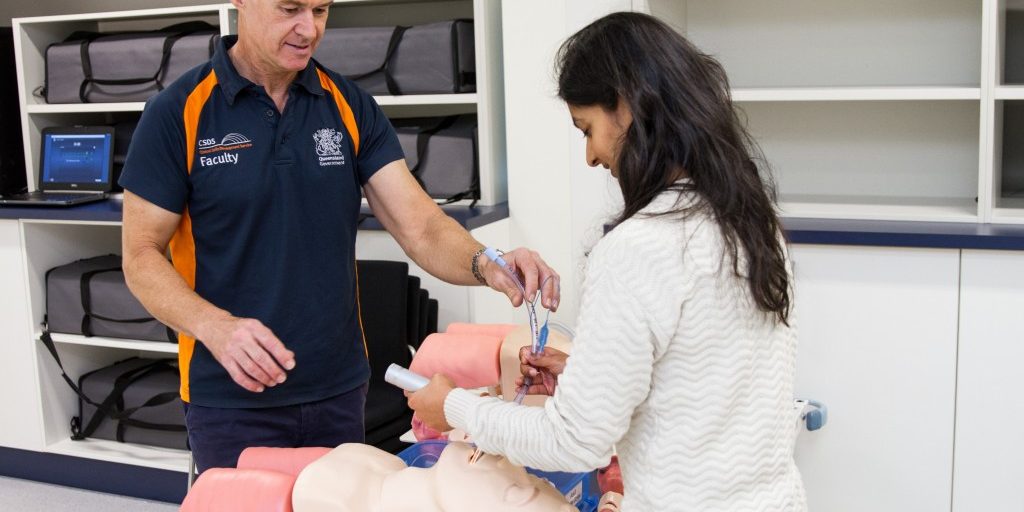
Welcome to the eLearning component of the Advanced Life Support course.
Below are the objectives for the entire blended course, please note that this eLearning equips you with the knowledge necessary to fulfil the outcomes, but does not allow learners to demonstrate skill; learners will have the opportunity to demonstrate skill in the face-to-face component.
Also, please note that to attend the face-to-face component you need to complete the core modules, however the elective modules are optional.
Learning objective
The aim of this course is to provide competence based assessment of the knowledge and skills required in providing adult Advanced Life Support (ALS) utilising the Australia and New Zealand Resuscitation Council (ANZCOR) guidelines.
Learning outcomes
Following completion of this course the learner should be able to:
- identify and demonstrate the ability to follow the ANZCOR ALS algorithm while adhering to the crisis resource management (CRM) principles.
- demonstrate the use and insertion techniques of airway management adjuncts.
- identify indications for advanced airway management.
- demonstrate effective external chest compressions (ECC).
- identify and demonstrate the safety issues, the indications and the process of performing manual defibrillation, cardioversion, and transcutaneous pacing.
Course Content
Defibrillation and other uses for a defibrillator
-
Introduction
-
Pad placement
-
Manual defibrillation: the when
-
Manual defibrillation: the how
-
Manual defibrillation summary
-
Manual defibrillation practice
-
Cardioversion: the when
-
Cardioversion: the how
-
Cardioversion summary
-
Cardioversion practice
-
Pacing: the when
-
Pacing: the how
-
Pacing summary
-
Defibrillator safety
-
Conclusion
-
Quiz
- Introduction
- Pad placement
- Manual defibrillation: the when
- Manual defibrillation: the how
- Manual defibrillation summary
- Manual defibrillation practice
- Cardioversion: the when
- Cardioversion: the how
- Cardioversion summary
- Cardioversion practice
- Pacing: the when
- Pacing: the how
- Pacing summary
- Defibrillator safety
- Conclusion
- Quiz
First line ALS drugs
-
Introduction
-
Drugs routinely used in cardiac arrest situation [Introduction]
-
Oxygen
-
Adrenaline
-
Amiodarone (cordarone)
-
Drug administration routes [Introduction]
-
Peripheral intravenous cannulation (PIVC)
-
Intraosseous access: overview
-
Intraosseous access: procedure
-
Central venous line
-
Endotracheal tube (ETT)
-
Conclusion
-
Quiz
- Introduction
- Drugs routinely used in cardiac arrest situation [Introduction]
- Oxygen
- Adrenaline
- Amiodarone (cordarone)
- Drug administration routes [Introduction]
- Peripheral intravenous cannulation (PIVC)
- Intraosseous access: overview
- Intraosseous access: procedure
- Central venous line
- Endotracheal tube (ETT)
- Conclusion
- Quiz
Post-resuscitation care
-
Introduction
-
Principles of post-resuscitation care
-
Airway and breathing
-
Circulation
-
Disability
-
Treatment of underlying cause of cardiac arrest
-
Prognostication and cardiac arrest
-
Transfer of the post-cardiac arrest patient
-
Care of the resuscitation team
-
Documentation
-
Care of the patient’s family after unsuccessful resuscitation
-
Conclusion
-
Quiz
- Introduction
- Principles of post-resuscitation care
- Airway and breathing
- Circulation
- Disability
- Treatment of underlying cause of cardiac arrest
- Prognostication and cardiac arrest
- Transfer of the post-cardiac arrest patient
- Care of the resuscitation team
- Documentation
- Care of the patient’s family after unsuccessful resuscitation
- Conclusion
- Quiz
