Five steps of risk assessment
https://elearning.sdc.qld.edu.au/lessons/healthcare-risk-assessment/
Identify the hazards
As part of this step it might be useful to take into account what has gone wrong in the past and also to consider near-miss incidents. 1 It is also important to do your research; walk around the relevant clinical area, talk to fellow staff and patients. If you need to get a clear picture of the activity, map it out or describe it to someone.1
Decide who might be harmed and how
As part of this step you need to consider whether multiple patients might be affected by the hazard, you also need to consider the most vulnerable patients, as they are likely to be affected more by the hazard. 1
Evaluate the risk
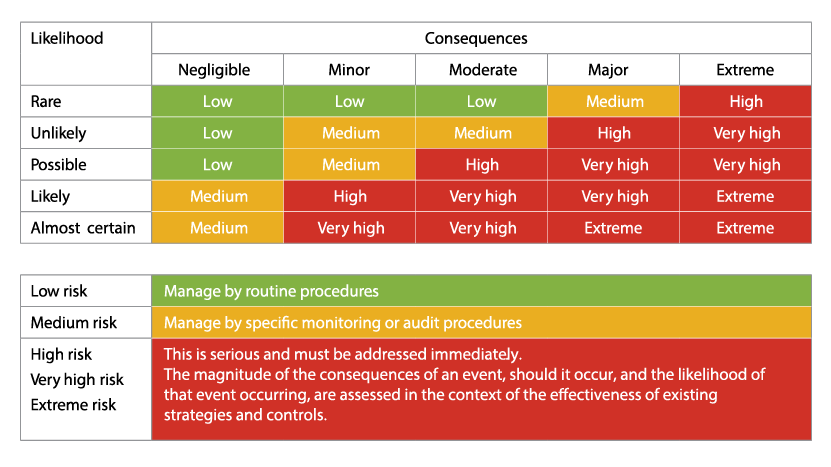
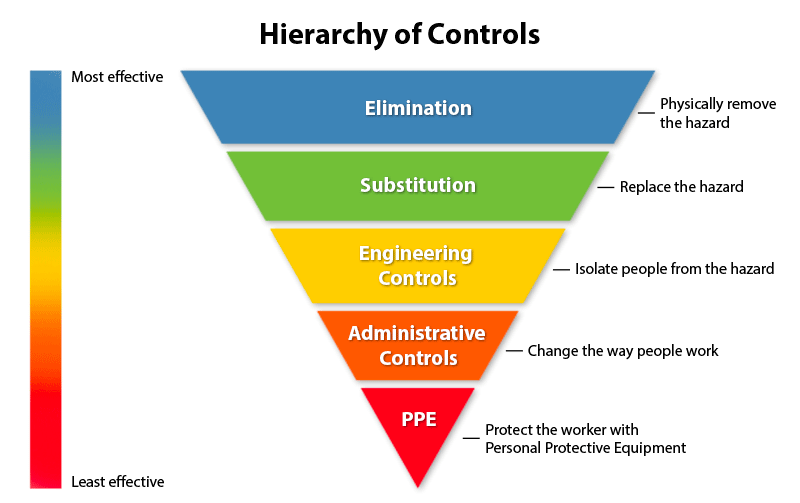
As part of this step you need to look at the consequence of the hazard – how bad could it be if it occurred? You also need to look at the likelihood of it happening. Using a risk matrix is helpful (one is shown below this list). To evaluate the risk you also need to decide on the precautions or controls that will most effectively reduce the consequence and/or the likelihood of the hazard occurring. 1
See risk matrix and heirachy of controls
Record necessary information
As part of this step you need to record your findings, your proposed action and also identify who will be responsible for taking specific action. You also need to record the date of implementing the action. 1
Review assessment and update if necessary
As part of this step you need to consider how changes might impact on a hazard that has previously been identified. This step needs to be considered when you are planning a change or when there has been a significant change; otherwise it should be done annually. 1
Insert example of risk matrix and hierarchy of control