
First Nations Perinatal Mental Health Screening
Note: You do not need to create a CSDS Central account or log into Central to access this course
First Nations Perinatal Mental Health Screening
This course is about perinatal mental health screening designed specifically for First Nations mothers. During pregnancy and after giving birth, many women experience mental health challenges. First Nations mothers are much more likely to face stressors during this time.
Existing perinatal mental health screening follows a standard medical approach with a risk-focused model. But for First Nations women, this method isn't effective or culturally safe. Studies show that when screening is done in a way that respects First Nations culture, it supports families more and leads to better outcomes.
The First Nations Wellbeing Screening Tool Project, part of the Perinatal Mental Health Screening Initiative, found that health professionals lack confidence in culturally appropriate screening.
This course helps health professionals fill in these gaps. It trains them to use culturally sensitive tools like the Kimberley Mum's Mood Scale, using skills such as clinical yarning and motivational interviewing. As well, knowledge of trauma informed care is important during perinatal mental health screening and is an integral part of the training.
Modules 1 and 2 incorporate excellent learning materials that were developed by Kimberley Aboriginal Medical Services (KAMS) and the Western Australian Centre for Rural Health (WACRH) and are hosted on their websites.
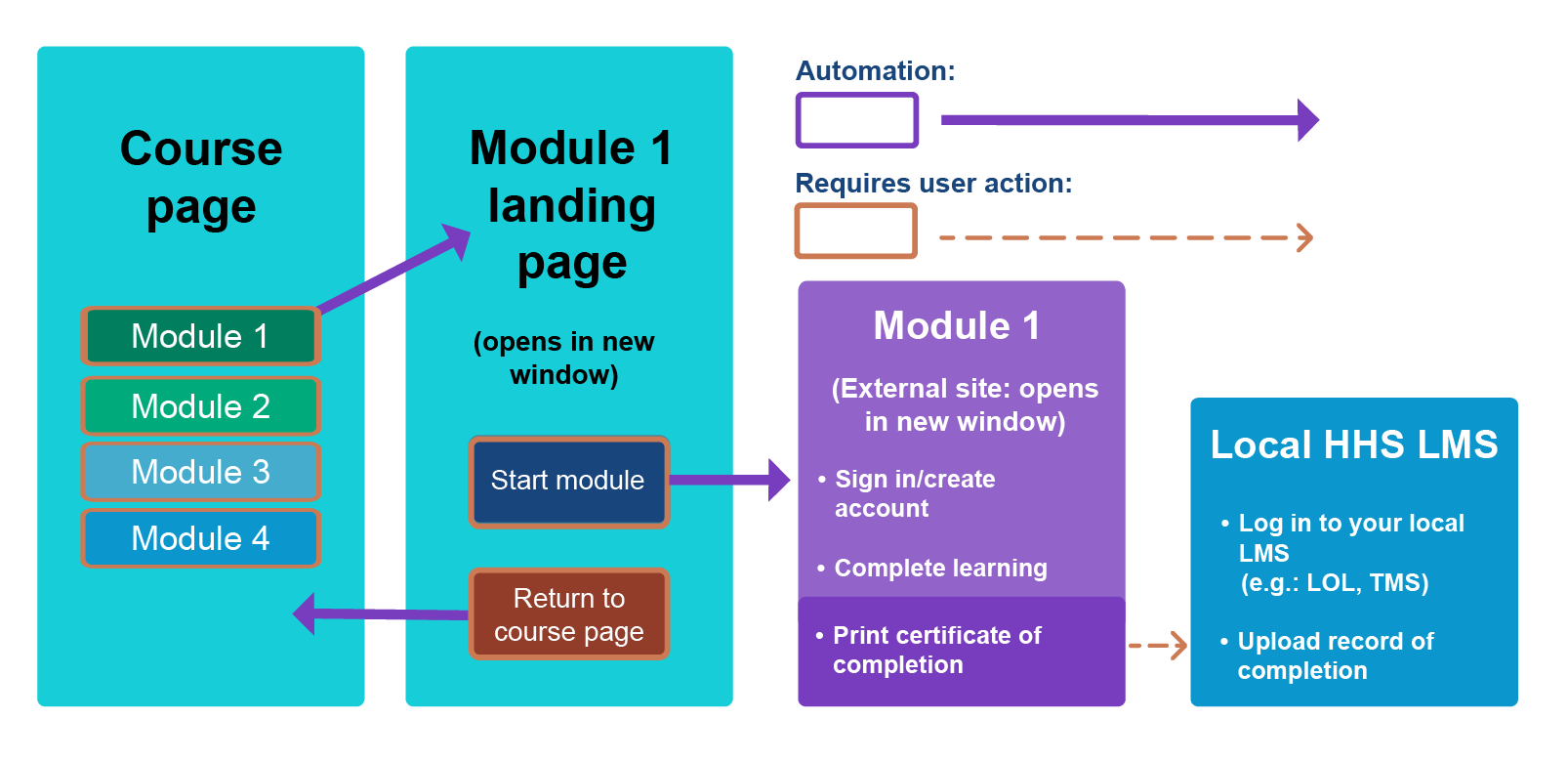
The diagram below demonstrates what to expect as you work through the course pathway to access these sites and return with your proof of completion documents.
Module 1 - Kimberley Mum's Mood Scale
This module provides a detailed description of how to perform a routine psychosocial assessment with Aboriginal and Torres Strait Islander clients using the Kimberley Mum’s Mood Scale. It also explains pathways for follow-up and referral, and the importance of psychosocial care.
Module 2 - Clinical yarning
This module discusses clinical yarning, which involves applying patient-centered communication skills in specific ways to ensure consultations are culturally secure for First Nations people.
Module 3 - Trauma-informed care
This module explains the impacts intergenerational trauma and complex childhood trauma have on Aboriginal and Torres Strait Islander families and communities and discusses how trauma-informed care is vital to providing culturally safe support to these families.
Module 4 - Motivational interviewing
This module provides an overview of the core theory, principles, skills and strategies of motivational interviewing, which is an empathetic and empowering approach to discussing change.
